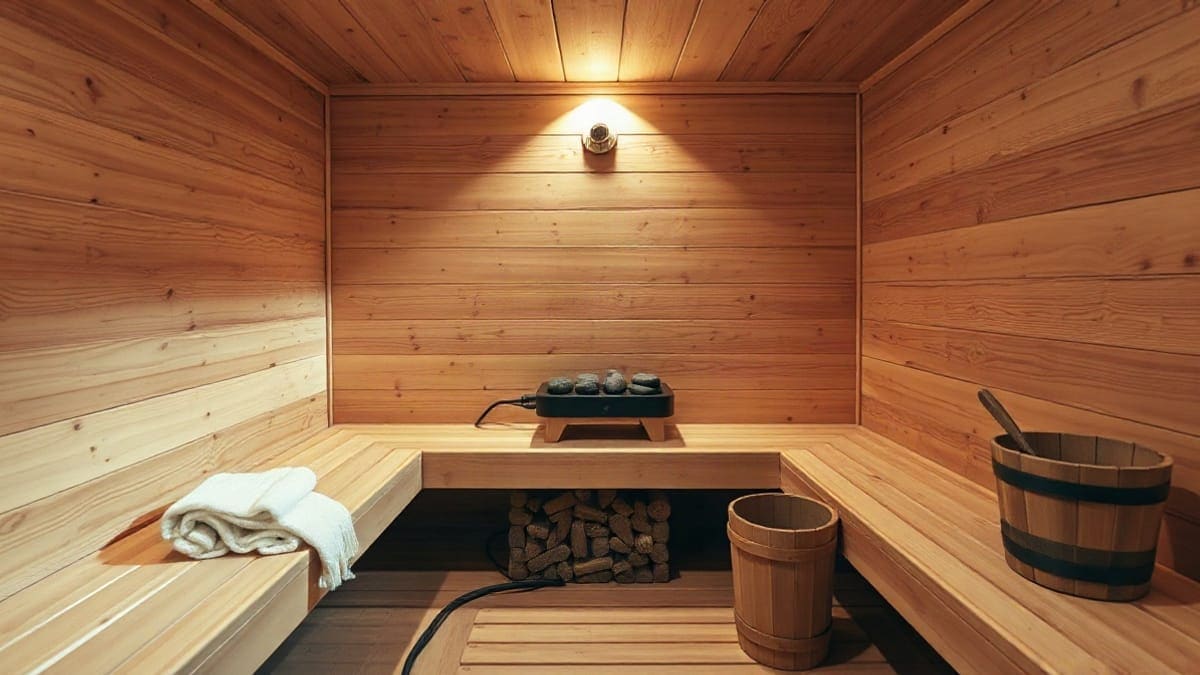
A home sauna is chosen by its circuit before its looks. This guide starts from what each cabin asks of your house: volts, amps, floor space and weight. It covers ten models, from a plug-in blanket to a 6 kW barrel, then explains how to size the room, read a spec sheet, wire the circuit, estimate running energy and judge the health evidence. Check the circuit first, then the room, then the wood. Maker pages and retailer listings, all read in November 2026, supply the figures; where they disagree the profile says so, and our own arithmetic is marked as ours.
Which home sauna should you buy?
In two lines
For most homes a 2-person infrared cabin such as the Sun Home Equinox (120 V, 15.67 A) or the Clearlight Sanctuary 2 (120 V, 18.75 A) is the buy; a 240 V barrel or cabin suits a backyard. The ten models below differ by circuit, footprint and room.
Ten models cover most home needs, from a 69 inch dome to a 6 person outdoor cabin. The table shows what each one asks of your house: voltage, amperage and footprint. Where two sources disagree, the model's section below says so. We left prices out, since they change often.
| Model | Type | Right for | Electrical | Size listed |
|---|---|---|---|---|
| Sun Home Equinox 2-Person | Full-spectrum infrared | Couples, indoor | 120 V, 1,880 W, 15.67 A, 20 A circuit | 50.9 x 45.9 x 77.7 in exterior |
| Clearlight Sanctuary 2 | Full-spectrum infrared | Low-EMF indoor use | 120 V, 2,250 W, 18.75 A, 20 A outlet | 51.75 x 47.75 x 77 in exterior |
| JNH Lifestyles Joyous+ 2-Person | Far infrared | Small footprint | 120 V, 1,700 W, 14.2 A, 15 A circuit | 47.3 x 39.5 x 75 in |
| Peak Saunas Fuji 2-Person | Full-spectrum infrared + red light | Red light fans | 120 V, 20 A | 53 x 44 x 75 in listed |
| Sunlighten Solo dome | Portable far infrared | No floor space | 120 V, 1,260 W, 10.5 A | 69 x 28 x 18 in dome |
| Lifepro RejuvaWrap | Infrared blanket | Smallest, easiest start | 110 V, 600 W, about 5.5 A | 71 x 71 in (X version 71 x 36 in) |
| Sun Home Luminar Outdoor 5-Person | Outdoor infrared | Families, patio | 240 V, 30 A, NEMA L6-30 | 82 x 51.5 x 82.5 in |
| Redwood Outdoors 4-Person Cabin | Traditional, outdoor | Hot, humid backyard sauna | 6 kW heater, 240 V; 110 V lights | 67 x 78 x 92.5 in |
| Redwood Outdoors 6-Person Barrel | Traditional barrel | Groups, 6 seats | 6 kW base; 8 kW (40 A) or 10.5 kW (50 A) optional, 240 V | 72.75 x 71 x 76.5 in |
| Almost Heaven Pinnacle 4-Person | Traditional barrel | Classic cedar barrel | 240 V, 6 kW, 30 A hardwired | 78 x 71 x 81.5 in |
Which sauna is best for two people indoors?
Pick between the Sun Home Equinox and the Clearlight Sanctuary 2. Both are 120 V, 20 A cabins on a dedicated outlet. The Equinox has a 45.4 by 39.9 inch interior; the Sanctuary 2 lists 46.5 by 44.25 inches. For the full two-seat field, see 2 person sauna.
Which sauna is good for a backyard?
A 240 V traditional cabin or barrel, such as the Redwood Outdoors cabin or the Almost Heaven Pinnacle. A hardwired heater gives the high heat and steam that infrared cabins do not. Compare the field on our outdoor sauna and barrel sauna pages.
Which sauna suits a tiny space or a renter?
A portable option. The Sunlighten Solo dome draws 1,260 W at 10.5 A on a NEMA 5-15 plug, and a Lifepro blanket needs only a plug. See portable sauna and one person sauna for the full set.
The ten home saunas in detail
In two lines
Each profile gives watts, volts, amps and size from the maker or a seller, so you can test your circuit first. The ten run from a 600 W blanket to a 6 kW barrel that draws 25 A at 240 V by our math.
Where a figure could not be confirmed on a current manufacturer page, we say so rather than fill it in.
Sun Home Equinox 2-Person Full Spectrum Infrared Sauna
Sun Home lists the Equinox at 120 V, 1,880 W and 15.67 A, with six heaters (four far infrared, two full spectrum, 500 W each) and a dedicated 20 A circuit. The interior measures 45.4 x 39.9 x 70.3 inches; the exterior, 50.9 x 45.9 x 77.7 inches with 2 inch feet. The unit weighs 541 lb and the door opening is 28 inches. By our arithmetic the interior holds about 74 cubic feet.
Two source gaps. Sun Home's collection page states under 0.5 mG EMF, while its help-center article says only "virtually zero". The maximum temperature is 165 degrees F on most pages and 155 on one.
Good for: two adults indoors on a standard dedicated outlet, and anyone who wants a brand with a large catalog. Not for: anyone who wants hot, humid steam, or a room with a ceiling under 78 inches.
Clearlight Sanctuary 2
Clearlight lists 120 V, 2,250 W and 18.75 A on a 120 V, 20 A outlet with a NEMA 5-20P plug. The interior is 46.5 x 44.25 x 72.5 inches; the exterior 51.75 x 47.75 x 77 inches; 450 lb. That is about 86 cubic feet inside by our math. An older page gave 47 x 44 x 74 inches, so dimensions changed between revisions.
The brand claims its heaters cancel EMF and ELF, and states under 1 mG at the heater surface and near 0 mG at the bench. Those are its own measurements with no lab or protocol given, and we found no independent reading. The warranty is described as a limited lifetime warranty, and a third-party review says it covers heaters, wood and electrical parts for residential use only.
Good for: buyers who rank low EMF first and want a long warranty. Not for: people who need the lowest watts, since 2,250 W is more than the Equinox's 1,880 W. See Clearlight saunas for the brand.
JNH Lifestyles Joyous+ 2-Person Far Infrared Sauna
JNH lists the Joyous+ 2-Person at 1,700 W on 120 V and 15 A, with a ceiling of 170 degrees F, 303 lb, 47.3 x 39.5 x 75 inches and an EMF figure of 8 mG. By arithmetic, 1,700 W at 120 V is about 14.2 A, which is 95 percent of a 15 A breaker. JNH says its 1 to 2 person saunas need no electrical changes. Older retailer listings gave 1,540 W and 250 lb for a "Joyous Flex", a page JNH no longer serves, so check the exact variant before you order. More on the brand at JNH Lifestyles saunas.
Good for: a household with one dedicated 15 A line and no spare 20 A circuit. Not for: anyone who wants margin on the breaker, since 14.2 A leaves almost none.
Peak Saunas Fuji 2-Person Full Spectrum Infrared Sauna
Peak's own review lists 53 x 44 x 75 inches and a 120 V, 20 A requirement, with eight panels mixing carbon far infrared and halogen or quartz, covering 700 to 25,000 nm. The maximum is 150 degrees F. It also carries a full-body red light panel. We found no wattage and no measured EMF value, so "near zero EMF" in the product title is a claim we could not check.
Good for: buyers who want red light in the same cabin; read red light sauna first. Not for: anyone who needs a published wattage and EMF reading before buying. Brand page: Peak Saunas.
Sunlighten Solo portable dome
Sunlighten lists the Solo dome at 120 V, 1,260 W and 10.5 A on a NEMA 5-15 plug, with five SoloCarbon heaters and a 150 degree F maximum. The dome measures 69 x 28 x 18 inches (the page does not say whether that is folded or in use). Heaters carry a limited lifetime residential warranty of 7 years; controllers, 3 years.
Good for: apartments and small rooms where a cabin cannot go. Not for: two people at once, or anyone who wants to sit upright.
Lifepro RejuvaWrap infrared sauna blanket
Lifepro's support page lists 600 W on 110 V, which is about 5.5 A, nine temperature levels from 95 to 176 degrees F, 14.7 lb and a 71 x 71 inch wrap (the RejuvaWrap X is 71 x 36 inches with two arm holes). It cites far infrared in the 5 to 14 micrometer range and very low EMF of 0.1 to 0.2 microtesla, which is 1 to 2 mG.
Recall notice: in October 2025 the U.S. Consumer Product Safety Commission recalled about 78,000 Lifepro BioRemedy blankets (recall 26-036) after 65 overheating reports, 32 of them burns. The RejuvaWrap listed here is a different product, but confirm your model before you buy, and we link no BioRemedy blanket.
Good for: the smallest footprint, travel and a first try. Not for: anyone expecting a cabin's heat on the lungs and face. Brand page: Lifepro saunas.
Sun Home Luminar Outdoor 5-Person Infrared Sauna
Sun Home lists five far-infrared and ten full-spectrum heaters. Sun Home's guide gives 82 x 51.5 x 82.5 inches, a 24 inch door, 20 inch bench depth and 1,070 lb, where two third-party reviews say 1,270 lb. A retailer lists 240 V, 30 A and a NEMA L6-30P plug; Sun Home's pages describe a dedicated 30 A circuit with an L6-30 outlet. We found no wattage figure. Sun Home's own guide warns that wrong voltage voids the warranty, so confirm with the 5-person manual. Read the Sun Home Luminar review.
Good for: families and entertaining outdoors with infrared. Not for: anyone who wants steam, or lacks a 240 V, 30 A circuit near the pad.
Redwood Outdoors 4-Person Cabin Sauna
The base kit includes a 6 kW Harvia KIP heater, with 8 kW Wi-Fi upgrades, and one page advises 8 kW in cold climates. Power is 240 V for the heater and 110 V for lights. The walls are heat-treated Canadian hemlock. Redwood's product page lists 67 x 78 x 92.5 inches and 1,150 lb, while earlier listings gave 800 to 990 lb with other dimension sets. Redwood says all figures are approximate. See the Redwood Outdoors 4 person cabin review.
Good for: a hot, humid backyard sauna for up to four. Not for: a pad with a hard weight limit, since the cabin ships at about 1,150 lb.
Redwood Outdoors 6-Person Barrel Sauna
Redwood lists a 6 kW Harvia KIP heater as the base, with 8 kW and 10.5 kW heaters as options on 240 V, needing 40 A and 50 A breakers and holding 132 lb and 176 lb of rocks. The barrel measures 72.75 x 71 x 76.5 inches and weighs 900 lb. Brand overview: Redwood Outdoors saunas.
Good for: groups of five or six who want a barrel. Not for: small yards, since the barrel is 72.75 inches wide.
Almost Heaven Pinnacle 4-Person Barrel Sauna
Almost Heaven lists 78 x 71 x 81.5 inches outside (75.25 x 63.25 x 69.25 inside), a 6 kW 240 V heater on a 30 A hardwired circuit, a light on a separate 120 V, 15 A plug, 1 3/8 inch wood, U.S. manufacture and 6 to 8 weeks delivery. Retailers name the heater as a Harvia KIP60B and give 715 lb shipping, a weight the maker does not publish. Our arithmetic: 6 kW at 240 V is 25 A. The maker says to hire a licensed electrician. See Almost Heaven saunas.
Good for: a classic cedar barrel for four with a mid-size heater. Not for: a bigger group, or a yard with no hardwire run.
What is a sauna and how does a sauna work?
In two lines
A sauna is an insulated, usually wood-lined room heated so you sweat. Traditional cabins heat the air with a 6 to 10.5 kW heater and stones; infrared cabins warm you directly with panels on a 120 V circuit of 15 to 20 A.
A traditional sauna uses an electric, wood or gas heater and sometimes stones that you splash with water. An infrared sauna uses heater panels and keeps the air cooler.
How does a home sauna heat you?
In a traditional cabin the heater raises the air temperature and the stones add humidity when water hits them. In an infrared cabin the panels emit infrared light that warms skin and tissue, so the air stays cooler: Cleveland Clinic puts typical infrared cabin air at 110 to 135 degrees F, against 150 to 195 degrees F in a traditional sauna, while makers print ceilings of 150 to 170 degrees F. The two are covered side by side in infrared vs traditional sauna, and the traditional style in what a traditional dry sauna is.
Where did the sauna come from?
The word and the practice are Finnish, and Finland is where most modern sauna culture and heater makers such as Harvia come from.
Which type of home sauna is best for you?
In two lines
Eight types cover the market, from a 120 V infrared cabin at 10.5 to 18.75 A to a 240 V traditional barrel at 30 to 50 A. Decide dry or wet heat first, then match the circuit you have.
The table puts them in one place, using figures from the ten models above where we have them.
| Type | Heat source | Typical electrical need |
|---|---|---|
| Traditional electric | Electric heater, stones | 240 V, 6 to 10.5 kW, 30 to 50 A |
| Wood-burning | Wood stove | None for the heater |
| Far infrared | Carbon or ceramic panels | 120 V, 10.5 to 15.67 A |
| Full spectrum infrared | Near, mid and far panels | 120 V, 15.67 to 18.75 A |
| Hybrid | Heater plus panels | Often 240 V |
| Outdoor barrel | Heater, 4 to 6 seats | 240 V, 30 to 50 A |
| Cabin | Heater or panels | 240 V or 120 V |
| Portable dome or blanket | Flexible panels | 120 V plug |
| Hammam, steam room | Steam generator | Own circuit and waterproofing |
Is a hybrid sauna worth it?
A hybrid pairs a heater with infrared panels, so you can run one or both. The trade is more parts to fail and a larger electrical load than either alone. See our hybrid sauna guide page and the sauna kits guide for the traditional route.
What is a hammam, and is it a sauna?
A hammam or steam room is wet, low-temperature heat from a steam generator. It is a different product with different plumbing and waterproofing. Read sauna vs steam room and home steam room before choosing between them, and the steam shower guide if a bathroom is your only space.
Is infrared better than traditional?
In two lines
Neither wins in general. Infrared cabins draw 1,260 to 2,250 W on a 120 V outlet and carry maker ceilings of 150 to 170 degrees F; traditional cabins draw 6 to 10.5 kW on 240 V and run hotter and wetter.
The table lists what you actually compare when shopping. The temperatures come from the makers' pages for the models above.
| Question | Infrared cabin | Traditional cabin |
|---|---|---|
| Typical power | 1,260 to 2,250 W | 6 to 10.5 kW |
| Voltage | 120 V on a 15 to 20 A circuit | 240 V on a 30 to 50 A circuit |
| Max temperature listed | 150 to 170 degrees F | Set by the heater and room size |
| Humidity | Low | Raised when you add water to stones |
| Installation | Plug in, level floor | Electrician, ventilation, clearances |
| Interior size, 2 person | About 74 to 86 cubic feet | 141 cubic feet or more for the smallest heater range |
A maker's ceiling is not the air you sit in: Cleveland Clinic gives 110 to 135 degrees F for typical infrared air and 150 to 195 degrees F for a traditional sauna, and infrared heats you directly. Our infrared sauna guide page covers that type in depth, and infrared sauna benefits covers the evidence.
How to choose a home sauna: the six checks that decide
In two lines
Check six things in this order: how many people, which circuit you have, type and heater, wood, certification and warranty, and where it goes. The circuit comes second because a 240 V sauna with no 240 V line adds an electrician's bill.
How many people should it seat?
A 2-person infrared cabin has an interior of 45.4 to 46.5 inches wide. A 4-person cabin needs about 67 by 78 inches outside on the Redwood Outdoors page. See how big a sauna you need and, for a pair, 2 person sauna.
120 V or 240 V?
If your only option is a standard outlet, you are choosing from the infrared cabins and the portable domes. If you can run a hardwired circuit, you can add traditional heaters. The next two sections give the numbers.
Which wood and finish?
Cedar, hemlock, spruce and thermowood are the main choices, covered in the wood table below.
Does certification matter?
Yes. Ask for the heater's and the cabin's listing from a recognized lab such as ETL or UL. We did not confirm a lab listing for each model above, so ask the seller for the file before you buy.
What should the warranty cover?
Sunlighten lists 7 years on Solo heaters and 3 years on controllers. Clearlight describes a limited lifetime warranty for residential use. A warranty that voids with the wrong voltage, as Sun Home's guide says, makes the install a warranty issue too.
Where will it go?
Indoors, a room with a level floor and a nearby circuit. Outdoors, a pad, a path for the cable, and local rules. See the indoor sauna guide and outdoor sauna, plus the sauna in bathroom page if that is your plan.
How do you read a sauna spec sheet?
In two lines
Watts divided by volts gives amps: the Equinox's 1,880 W at 120 V is 15.67 A. Interior volume is width times depth times height in inches divided by 1,728, and 1 microtesla equals 10 mG.
Five numbers do most of the work: watts, volts, amps, interior volume and EMF. Watts tell you the heat output and the running cost. Volts and amps tell you which circuit you need. Volume tells you whether a heater suits the room. EMF, in milligauss (mG), tells you the maker's claim about magnetic fields from the heaters.
Watts divided by volts gives amps, which is the check we used throughout. The Sun Home Equinox at 1,880 W and 120 V is 15.67 A, which matches Sun Home's listing. The same sum on the Clearlight at 2,250 W gives 18.75 A. When a listing's amps do not match its watts and volts, ask the seller why.
Interior volume is width times depth times height in inches, divided by 1,728 for cubic feet. EMF has its own conversion, so Lifepro's 0.1 to 0.2 microtesla is 1 to 2 mG, against Sun Home's under 0.5 mG for the Equinox.
A spec sheet is a starting point: Redwood calls its figures approximate, and the manual and your electrician have the last word.
How big a sauna do you need?
In two lines
A 2-person infrared cabin holds about 74 to 86 cubic feet inside, and the 5-person Luminar is about 202 cubic feet outside. Traditional heaters are rated against room volume, so measure the room before you buy.
The table converts the listings above into cubic feet by our arithmetic (width x depth x height in inches, divided by 1,728). Interior figures are used where a maker gives them, and exterior otherwise.
| Model | Dimensions used | Our volume |
|---|---|---|
| Sun Home Equinox | 45.4 x 39.9 x 70.3 in | About 74 cu ft |
| Clearlight Sanctuary 2 | 46.5 x 44.25 x 72.5 in | About 86 cu ft |
| JNH Joyous+ 2-Person | 47.3 x 39.5 x 75 in | About 81 cu ft |
| Peak Fuji | 53 x 44 x 75 in | About 101 cu ft |
| Sun Home Luminar 5-person | 82 x 51.5 x 82.5 in | About 202 cu ft |
A 3 or 4 person buyer should compare the middle models on our sauna size guide. In an enclosed space add clearance: Clearlight recommends 4 inches around the cabin.
What power does a home sauna need?
In two lines
Infrared cabins above about 1,400 W need a dedicated 20 A circuit on 120 V, and the Clearlight Sanctuary 2 draws 18.75 A, 94 percent of that breaker. Traditional heaters of 6 to 10.5 kW need hardwired 240 V at 30 to 50 A.
The table shows what the models above state, plus our arithmetic.
| Model | Rated power | Voltage | Current | Circuit named by maker |
|---|---|---|---|---|
| Lifepro RejuvaWrap | 600 W | 110 V | About 5.5 A by our math | Plug-in |
| Sunlighten Solo | 1,260 W | 120 V | 10.5 A | NEMA 5-15 plug |
| JNH Joyous+ 2 | 1,700 W | 120 V | About 14.2 A by our math | 15 A |
| Sun Home Equinox | 1,880 W | 120 V | 15.67 A | Dedicated 20 A |
| Clearlight Sanctuary 2 | 2,250 W | 120 V | 18.75 A | 20 A, NEMA 5-20P |
| Peak Fuji | Not found | 120 V | Up to 20 A | 20 A |
| Sun Home Luminar 5 | Not found | 240 V | 30 A | NEMA L6-30 |
| Almost Heaven Pinnacle | 6 kW | 240 V | 25 A by our math | 30 A hardwired |
| Redwood 6-person barrel | 6 kW base, 8 kW or 10.5 kW optional | 240 V | 25 A base; 33 A or 44 A on the options, by our math | 40 A or 50 A for the options |
Notice the Clearlight: 18.75 A on a 20 A circuit is 94 percent of the breaker, which is why a dedicated line matters. Sauna vendors treat heaters as continuous loads and size the circuit at 125 percent of the heater's current. We could only confirm that rule in vendor guides, not in the code text itself. On that rule, 25 A becomes 31 A, which is above a 30 A breaker. The Pinnacle's 30 A listing and the Redwood's 40 A and 50 A figures therefore sit below the vendor rule, so your electrician decides. Our sauna electrical requirements page goes deeper, and 120V sauna heater guide lists plug-in heaters.
Can a home sauna run on a regular outlet?
Yes for an infrared cabin, a dome or a blanket on the right circuit. A Sunlighten Solo draws 10.5 A and uses a standard NEMA 5-15 plug. A Sanctuary 2 needs a 20 A outlet. A 6 kW heater does not.
What size heater does a sauna need?
In two lines
Heater power follows room volume: Harvia rates its 6 kW Cilindro for about 141 to 283 cubic feet at 25 A. Glass, tile or thin insulation call for more power, so a 4-person cabin or barrel often ships with 6 kW as the base and 8 kW as the upgrade.
Retailers give a rule of about 1 kW per 45 to 50 cubic feet, while Harvia's support page, read by search, says about 1 kW per cubic meter, roughly 35 cubic feet, plus extra volume for glass or stone. The table shows Harvia Cilindro heater ranges, with the 6 kW row from Harvia's data sheet and the others from retailers.
| Heater | Room volume rated | Current |
|---|---|---|
| Harvia Cilindro 6 kW | About 141 to 283 cu ft | 25 A |
| Harvia Cilindro 8 kW | About 141 to 431 cu ft | 33.4 A |
| Harvia Cilindro 9 kW | About 141 to 494 cu ft | 37.5 A |
| Harvia Cilindro 10.5 kW | About 141 to 636 cu ft | Not listed |
The 6 kW figure is 6,000 W divided by 240 V; 37.5 A belongs to the 9 kW unit. The Pinnacle barrel is sold with a 6 kW heater, and the 67 x 78 inch Redwood cabin with 6 kW as base and 8 kW as an upgrade for cold climates. The sauna heater size calculator walks through the math, sauna heater guide compares models and the electric sauna guide covers the whole cabin.
What wood should a sauna be made of?
In two lines
Wood changes aroma, weathering and how benches feel, not heater output. Redwood's cabin is heat-treated Canadian hemlock, the Pinnacle is cedar, and thermowood is sold as resin-free; ask each maker which species lines the interior.
The table compares the common choices using what the manufacturers above state.
| Wood | What makers say |
|---|---|
| Canadian hemlock | Low-resin interior; heat-treated in Redwood's 4-person cabin |
| Western red cedar | Weather-resistant, aromatic |
| Thermowood | Resin-free, naturally weather-resistant |
| Spruce | Common interior |
| Aspen, thermo-aspen | Used for interiors |
A cedar barrel such as the Pinnacle is the classic outdoor shape. For wood choices in detail, see the cedar sauna guide and the wood for sauna guide.
Should a home sauna go inside or outside?
In two lines
Inside suits 120 V infrared cabins in a dry room; outside suits 240 V barrels and cabins on a level pad. The Luminar weighs 1,070 lb by Sun Home's guide, so the pad and the cable run decide more than the heat.
Infrared cabins are built for dry rooms, and small traditional kits can go indoors. Barrels and cabins with a hardwired 240 V heater need a weatherproof build.
Where should you put a sauna in your house?
Choose a room with a level floor, a dedicated circuit within reach and the clearance the maker lists. A garage, a spare room or a basement corner works for a 120 V cabin. A bathroom needs special care, see sauna in bathroom. Always follow the manual for ventilation.
What is the best place for an outdoor sauna?
A level, drained pad with the electrical run planned first. Sun Home's guide gives the Luminar 1,070 lb (two reviews say 1,270 lb) and Redwood gives its cabin 1,150 lb, so the pad must carry it. Almost Heaven publishes no weight for the Pinnacle, and retailers say 715 lb shipping. Check local permit rules before you pour anything, and read outdoor sauna kits if you want to build from a kit.
Can you build your own sauna?
Yes, from a kit or plans, with the heater and wiring done to code by a licensed electrician. Our how to build a sauna page walks the order of work.
How much electricity does a home sauna use?
In two lines
Energy is power times time: a 1.88 kW infrared cabin uses at most 1.88 kWh an hour and a 6 kW barrel at most 6 kWh. Multiply by your rate; real sessions use less because thermostats cycle the heater.
We did not find a manufacturer figure for session energy, so the table shows the full-power ceiling and a half-power estimate. The half-power column is our assumption, not a measurement.
| Model | Rated power | Ceiling, 60 min | Half duty, 60 min |
|---|---|---|---|
| Sunlighten Solo | 1.26 kW | 1.26 kWh | 0.63 kWh |
| JNH Joyous+ 2 | 1.70 kW | 1.70 kWh | 0.85 kWh |
| Sun Home Equinox | 1.88 kW | 1.88 kWh | 0.94 kWh |
| Clearlight Sanctuary 2 | 2.25 kW | 2.25 kWh | 1.13 kWh |
| Almost Heaven Pinnacle, Redwood barrel base | 6 kW | 6 kWh | 3 kWh |
| Redwood 6-person barrel, 8 kW option | 8 kW | 8 kWh | 4 kWh |
| Redwood 6-person barrel, 10.5 kW option | 10.5 kW | 10.5 kWh | 5.25 kWh |
An 8 kW barrel can draw more than four times an infrared cabin's 1.88 kW, and that gap is the real running-cost difference between the two types. At the EIA U.S. residential average of 18.16 cents per kWh in August 2026, a full-power hour costs 34 cents for the Equinox and 109 cents for a 6 kW barrel, by our arithmetic.
Do home saunas use a lot of electricity?
A 1.88 kW infrared cabin draws about what a space heater does, and a 6 to 10.5 kW traditional heater as much as a large appliance. The ceiling table above is the honest range.
What does a home sauna cost, and what else do you pay for?
In two lines
We print no prices because sellers disagree and change them often. Money goes into the cabin, delivery, an electrician for any 240 V or dedicated circuit, an outdoor pad, and a heater upgrade when the base kit is too small.
One example: the Sun Home Equinox shows different figures on different pages of the same site, and sellers for the Peak Fuji disagree by thousands. Here is where the money goes, by tier.
Entry level is a blanket or dome, mid tier a 120 V 2-person infrared cabin, premium an outdoor 240 V cabin or barrel. Add delivery, the electrician, a pad for outdoor models and any heater upgrade. For a deeper look at cost drivers, see sauna cost and sauna accessories.
Are home saunas worth it?
If you will use it a few times a week, the cost per session falls quickly. If you use it once a month, a gym or spa may be cheaper, so count the sessions you will really take. For add-ons, see sauna gift ideas.
Is a sauna good for you?
In two lines
Possibly, within limits: a 2015 Finnish cohort of 2,315 men linked 4 to 7 sessions a week to a 0.50 hazard ratio for fatal heart disease against one session. It shows association, not cause, and it covered men only.
The strongest evidence is observational. Laukkanen and colleagues followed 2,315 men from eastern Finland for a median 20.7 years and published in JAMA Internal Medicine in 2015. Compared with one session a week, four to seven sessions a week went with lower fatal cardiovascular risk (hazard ratio 0.50), and two to three sessions with 0.73. The paper itself called for more work on mechanism.
| Finding in the 2015 cohort | Result |
|---|---|
| Fatal cardiovascular disease, 2 to 3 sessions/week vs 1 | Hazard ratio 0.73 |
| Fatal cardiovascular disease, 4 to 7 sessions/week vs 1 | Hazard ratio 0.50 |
| Fatal coronary heart disease, 2 to 3 and 4 to 7 sessions/week vs 1 | Hazard ratio 0.77 (95% CI 0.60 to 1.07) and 0.52 (0.31 to 0.88) |
| All-cause mortality, 2 to 3 and 4 to 7 sessions/week vs 1 | Hazard ratio 0.76 and 0.60 |
| Sudden cardiac death, 4 to 7 sessions/week vs 1 | Hazard ratio 0.37 (95% CI 0.18 to 0.75) |
| Sessions over 19 min vs under 11 min | Lower sudden cardiac death risk (0.48) |
Men who use saunas often may also differ in other habits, so this is an association. We do not claim cures. The topic has its own pages: sauna benefits, infrared sauna benefits, and the evidence on blood pressure, weight and detox. Read them rather than relying on a product page.
Do saunas lower blood pressure?
Some studies link regular use with lower blood pressure, but this page makes no promise. Heat can also lower blood pressure temporarily, which is a reason for people with low blood pressure to ask a doctor first. The evidence is on sauna and blood pressure.
Does a sauna help you lose weight?
We make no weight-loss claim here. A sauna makes you sweat, and the drop on a scale right after is mostly fluid. Read sauna weight loss before buying for that reason.
Who should not use a sauna?
In two lines
Pregnant people, anyone with heart disease or low blood pressure, children, and people drinking alcohol or taking heat-sensitive medication should ask a doctor first. Leave at once if you feel dizzy or your heart pounds.
This is general information, not medical advice. Sources differ on pregnancy.
- Pregnancy. Healthline reports that medical experts recommend avoiding saunas during pregnancy, Cleveland Clinic says to ask your doctor, and a 2001 review in the American Journal of Medicine judged it safe in an uncomplicated pregnancy (Hannuksela and Ellahham). See sauna pregnancy safety.
- Heart disease. Medical News Today says moderate use appears safe for most people, but those with cardiovascular disease should talk to a doctor first.
- Low blood pressure. A temporary drop can follow a session, so check first.
- Alcohol. All the sources we read say to avoid it, citing dehydration and low blood pressure.
- Dizziness or palpitations. Leave the sauna at once.
For the full list see sauna risks and safety and, for panels, infrared sauna EMF explained.
Is an infrared sauna safe?
For healthy adults, makers say yes under the manual's limits, and independent reviews describe the main risks as overheating and dehydration. Treat EMF claims with care: Sun Home lists under 0.5 mG, Lifepro states 1 to 2 mG, JNH gives 8 mG, Clearlight states under 1 mG from its own measurements, and Peak gives no number we could check. All are maker figures, so ask for a measured reading. In September 2026 the CPSC announced recall 26-784 of about 41,580 Sauna360 infrared saunas and kits (Finnleo IS44, IS440, IS565, S810 to S880 and Sentinel), with shipments paused; none of the ten models above is in it, and the Sauna360 notice lists the covered models. Pregnant users and people with heart conditions should ask a doctor first.
Can you use a sauna when you are sick?
If you have a fever, skip it and ask your doctor. For a mild cold, ask too, since heat and fluid loss add strain. We do not recommend a sauna as a treatment for illness.
How hot, how long and how often?
In two lines
Makers cap infrared cabins at 150 to 170 degrees F, but Cleveland Clinic puts typical infrared air at 110 to 135 degrees F against 150 to 195 degrees F in a stove sauna. Sessions over 19 minutes beat those under 11 in one cohort.
A traditional heater is sized to the room rather than capped by a spec we found. Session length and weekly frequency come from habit and the one big cohort study. The full figures live on the pages built for them.
- Temperature ranges: sauna temperature.
- Time: how long to stay in a sauna.
- Weekly use: how often to use a sauna.
- First session: how to use a sauna.
The over-19-minute result is an association, not a prescription. Start short, drink water, and leave if you feel unwell.
How do you use a home sauna the first time?
Shower, sit on the lower bench, keep the first session short, leave if dizzy, then cool down and drink water. The step-by-step is on how to use a sauna.
Can you sauna without a sauna?
Yes, in a limited way. A blanket or dome gives infrared heat with no cabin, and a steam shower gives wet heat in a bathroom. See portable steam sauna for steam and portable sauna for infrared. A hot bath is not a sauna, and none of these matches a hardwired heater's air temperature.
Three buying cases, worked through
In two lines
Run any home through four checks: circuit, space, heat and weight. A couple with a 20 A outlet can take either infrared cabin at 78 or 94 percent of the breaker, while a patio family needs a pad for about 1,070 lb.
Three common homes, run through the same checks. The figures come from the listings above, and the sums are ours.
A couple in a spare bedroom. The room has a 20 A outlet on its own breaker. The Sun Home Equinox needs 15.67 A, which is about 78 percent of that breaker, and the Clearlight Sanctuary 2 needs 18.75 A, about 94 percent. The cabin footprint is roughly 51 by 46 inches, so plan on at least 52 by 47 inches of floor, plus the 4 inches of clearance Clearlight advises when a cabin is enclosed. Either cabin fits. The choice then comes down to the warranty wording and the EMF claim you trust. The Equinox's running-cost ceiling of 1.88 kWh an hour is the lower of the two.
A family with a patio. The Luminar is 82 inches wide and about 1,070 lb by Sun Home's guide, and it wants a 240 V, 30 A circuit with an L6-30 outlet. That is two jobs before the first session: a pad that carries 1,070 lb and a run of cable from the panel. If the family would rather have steam, the Redwood 4-person cabin at 1,150 lb needs a 6 kW heater circuit, which is about 25 A at 240 V by our math, and the maker's own advice is 8 kW in cold climates. At 8 kW the same sum gives about 33 A. In both cases the electrician quotes the circuit before you order.
An apartment dweller. No spare circuit, no floor. The Sunlighten Solo dome draws 10.5 A on a standard plug and measures 69 by 28 by 18 inches. The Lifepro blanket packs smaller still. Neither seats two people, and neither reaches a traditional room's air temperature, but both are honest answers to a real constraint.
What do the studies say about how long to stay in?
The 2015 cohort grouped sessions under 11 minutes, 11 to 19 minutes and over 19 minutes. Longer sessions went with lower sudden cardiac death risk, but not with lower all-cause mortality. A result for one outcome does not carry to every outcome, and it came from men used to saunas.
Which home sauna fits your situation?
In two lines
Find your row: a renter takes a dome or blanket, a couple with a 20 A outlet takes the Equinox or Sanctuary 2, and a backyard takes a 240 V Redwood cabin or Pinnacle barrel. Ask an electrician or doctor first where wiring or health is in doubt.
| Your situation | Choose |
|---|---|
| Renting, no spare circuit | Sunlighten Solo dome or Lifepro blanket |
| Couple, spare room, standard outlet | Sun Home Equinox or Clearlight Sanctuary 2 |
| One dedicated 15 A line | JNH Joyous+ 2 (14.2 A, 95 percent of the breaker) |
| Red light matters to you | Peak Fuji |
| Hot, humid backyard sauna | Redwood 4-person cabin |
| Group of 5 or 6 | Redwood 6-person barrel |
| Classic cedar barrel for 4 | Almost Heaven Pinnacle |
| Family, patio, infrared | Sun Home Luminar 5-person |
If your row is not here, start with a size and type decision from the earlier sections. If you are still undecided between two types, compare indoor sauna guide and the outdoor sauna guide.
Which brand should you trust?
Sun Home, JNH, Peak, Redwood Outdoors and Lifepro are brands we link to through partner programs. Compare them on the sauna brands guide, and read the brand pages for Sun Home, Redwood Outdoors, Peak, JNH, Lifepro and Sunlighten.
Sauna, steam room and cold plunge: how do they combine?
In two lines
A sauna is dry or low-humidity heat, a steam room is wet heat at a lower temperature, and a cold plunge is the cold half of contrast therapy. Each is a separate purchase with its own power and plumbing.
Compare sauna vs steam room, steam room benefits, cold plunge benefits and cold plunge and sauna contrast therapy. A tub is covered in cold plunge tub. Ask your doctor before moving fast from hot to cold if you have heart or blood pressure issues.
Common mistakes when buying a home sauna
In two lines
Most regrets come from power, space and expectations, not wood: buying 240 V with no 240 V circuit, trusting one listing, and forgetting the pad's load. A 6 kW heater is 25 A by our math.
- Buying 240 V without a 240 V circuit. A 6 kW heater is 25 A by our math, and the vendor rule wants more. Price the electrician first.
- Trusting one listing. The Luminar shows 1,070 lb in Sun Home's guide and 1,270 lb in reviews. The Equinox shows 155 or 165 degrees F depending on the page.
- Comparing degrees F across types. Infrared and traditional rooms feel different at the same number.
- Ignoring the interior volume. A 2-person cabin may seat two but be only 74 cubic feet.
- Believing EMF labels without a reading. Ask for a measured value in mG.
- Skipping the doctor on health limits. Pregnancy, heart disease and low blood pressure need a conversation first.
- Forgetting delivery weight. The Luminar is about 1,070 lb, the Redwood cabin 1,150 lb and the Equinox 541 lb.
How do you care for and fix a home sauna?
In two lines
Wipe the benches after each session, leave the door open so the wood dries, and keep the heater clear. A heater that will not heat has its own troubleshooting guide.
For cleaning steps see how to clean a sauna, and for a heater that will not heat, sauna heater not working.
How we chose these saunas
In two lines
We started with five partner brands, added Clearlight, Sunlighten and Almost Heaven, and kept only models sold in the United States. We have not tested any model, we publish no store ratings, and we flag every conflict between sources.
We read manufacturer pages, retailer listings and published reviews and did our own arithmetic. We may earn a commission if you buy through a Check price link, at no cost to you. A model dropped from the list if we could not find a figure to support our claim.
Which questions have their own guide?
In two lines
Skin, heart, hangover, cholesterol, fertility and dementia questions each have a dedicated guide that rates the strength of every study. This page answers only what bears on buying a home sauna.
Skin and acne questions are answered in sauna for skin. Questions about the heart are answered in sauna and heart health.
Hangovers, cholesterol, fertility and dementia are handled in sauna health studies. For infrared session length see how long in an infrared sauna, and for the order of heat and steam, sauna or steam room first.
Keep reading: guides by need
In two lines
Four routes lead on from here: by type, by size, build and parts, and health. Each link goes to a full guide with its own tables, figures and sources.
- By type: infrared sauna guide, barrel sauna guide, portable sauna guide.
- By size: 2 person sauna, one person sauna.
- Build and parts: sauna kits, sauna heater, how to build a sauna.
- Health: sauna benefits, sauna risks and safety.
FAQ
What does a sauna do to your body?
A sauna raises skin and body temperature and makes you sweat, and heart rate usually rises while you sit. The long-term effects are studied mostly in observational work, so no cure is promised. See sauna benefits for the evidence and ask your doctor if you have a health condition.
What are the benefits of a home sauna?
The best-known evidence is the 2015 Finnish cohort of 2,315 men, which linked frequent sauna use with lower fatal cardiovascular risk. It shows association, not cause. Many other claimed benefits rest on small or short studies, so check the dedicated benefits page before buying for one reason.
Which type of sauna is healthiest?
No type is proven healthier. The large study used traditional Finnish saunas, and infrared evidence is thinner. Choose the type you will use safely and often, and ask your doctor about your own limits.
How much sauna is too much?
There is no single number. Leave at once if you feel dizzy, nauseous or have palpitations, and stay hydrated. The study linked more frequent use with lower risk in healthy Finnish men, but that does not set a safe maximum for you.
Should you sauna every day?
Some Finnish users do, and the cohort grouped four to seven sessions a week together. It is an association in men who were already used to saunas. Check with your doctor and build up slowly.
Do saunas burn calories?
A sauna raises heart rate, but we found no figure we trust for calories burned, so we give none. Weight on a scale after a session is mostly fluid. See sauna weight loss.
Does a sauna help with a cold or inflammation?
We make no treatment claim. For a cold, a fever means skip it. For pain and inflammation, read sauna for inflammation and pain and ask your doctor.
Is a sauna good after a workout?
Many people use one then. Hydrate first and keep the session short. Details are on sauna after workout.
How long does a home sauna take to heat up?
It varies by heater and room. Sun Home's Luminar guide gives 15 to 20 minutes at 65 to 80 degrees F outside, 20 to 30 minutes at 40 to 65 degrees F and over 60 minutes below 40 degrees F, and Harvia's manual says about an hour for a traditional heater. Read how long a sauna takes to heat up and your manual.
Do home saunas need ventilation?
Yes, follow the manual: traditional cabins need air in and out for the heater and the bathers. Details differ by model, so we do not give vent sizes here. A licensed installer should confirm.
Do home saunas get moldy?
Damp wood can, if a cabin stays closed and wet. See how to clean a sauna.
Do infrared saunas get hot enough?
The makers above list 150 degrees F (Peak Fuji, Sunlighten Solo) to 165 degrees F (Sun Home Equinox) and 170 degrees F (JNH Joyous+), while Cleveland Clinic puts typical infrared air at 110 to 135 degrees F. That is lower than a traditional room, though infrared heats you directly. Choose by what you like, not the number.
How many saunas a week is healthy?
The Finnish cohort compared one, two to three, and four to seven a week. That is the only range we cite, and it is observational. See how often to use a sauna.
Are saunas HSA or FSA eligible?
Rules depend on your plan and a doctor's letter, and we cannot confirm them for you. See sauna HSA and FSA eligibility and ask your plan administrator.
Where can you buy a home sauna?
From the maker or an authorized seller. Use the Check price buttons above, and keep the heater's listing and the warranty in writing. See the sauna brands guide.
How long do home saunas last?
We found no maker figure for lifespan. Warranty lengths are the only hard numbers: Sunlighten lists 7 years on Solo heaters and 3 on controllers, and Clearlight describes a limited lifetime residential warranty.
Sources
- Sun Home Saunas, Equinox specifications, Luminar saunas, Luminar user guide, electrical requirements.
- Clearlight, Sanctuary 2 spec pack and product page.
- JNH Lifestyles, Joyous+ 2 person.
- Peak Saunas, Fuji review.
- Sunlighten, Solo dome.
- Lifepro, RejuvaWrap support page.
- Redwood Outdoors, 4-person cabin and 6-person barrel.
- Almost Heaven, Pinnacle 4-person barrel.
- Harvia Cilindro listings, Peak Saunas and Finnish Sauna Builders.
- Laukkanen T. et al., Association between sauna bathing and fatal cardiovascular and all-cause mortality events, JAMA Internal Medicine, 2015, and the Nature Reviews Cardiology commentary.
- Safety summaries: Healthline on infrared sauna risks, Medical News Today, Poison.org.
- Recalls: U.S. CPSC, recall 26-036, Lifepro BioRemedy blankets, and Sauna360 infrared recall 26-784.
- Cleveland Clinic, sauna benefits.
- Electrical code: NFPA 70, National Electrical Code.
Keep comparing
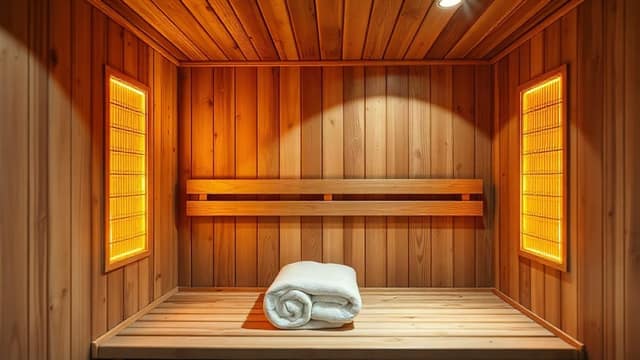 Infrared SaunaTen infrared saunas compared from 1 to 4 seats, indoor and outdoor, by size in inches, amps, kWh
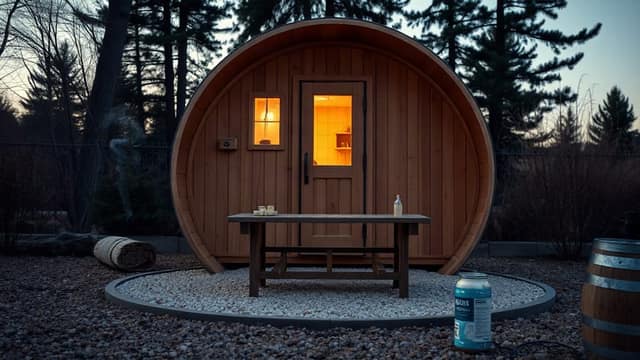 Outdoor SaunaCabins, barrels, cubes and infrared, with real weights, heaters, circuits
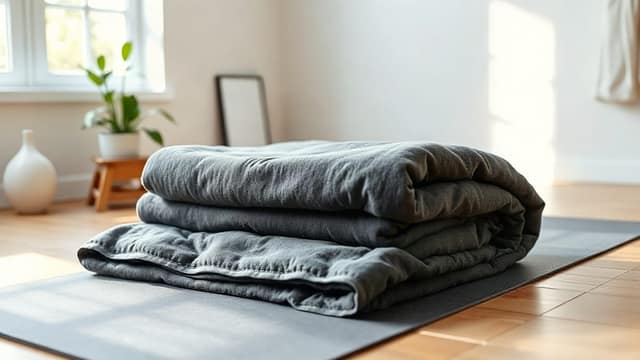 Portable Saunas for HomeEight real models compared on size, watts, amps, top heat and weight, with the Lifepro blanket recall
 Red Light and Near Infrared SaunaNine home saunas with red or near infrared LEDs compared on wavelength in nm, published mW/cm2, size
 Sauna Kits (Indoor and Outdoor)Precut, prefab, cabin and barrel kits with box contents, wood, heater, circuit, floor and ceiling needs