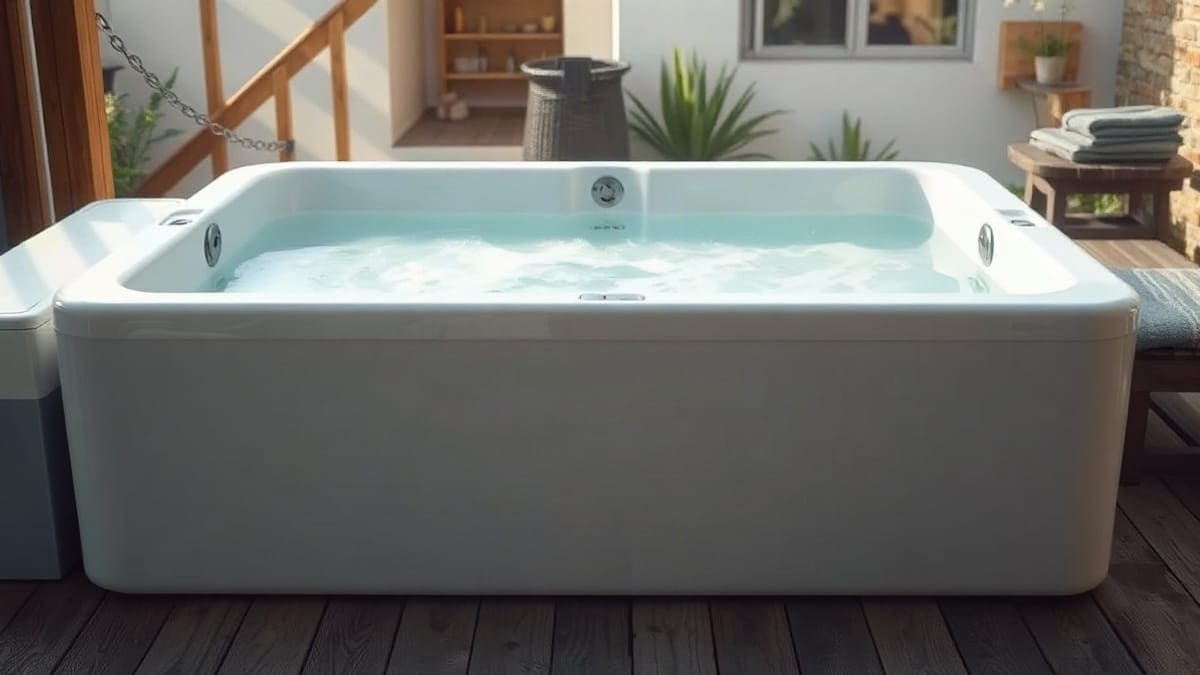
Neither if you have a heart condition, uncontrolled blood pressure or a pregnancy. Then talk to your doctor before any sauna or cold tub. For a first try, a spa session or a warm sauna followed by a cool shower costs no equipment.
Heat then cold is easy to describe and easy to get wrong. This guide sets out the order, the minutes, the degrees and the rounds, rates the evidence for the pair by what each study really tested, and says who should skip it. It then covers the space, weight and circuits that a sauna plus a tub need at home, with five pairs drawn from maker pages read in November 2026. We flag the numbers that are our own practice tips rather than trial results, and the maker figures we could not confirm. Everything here is general information, not medical advice.
What is a sauna and cold plunge routine?
In two lines
It is contrast therapy: you heat the body in a sauna at 150 to 185°F, cool it in water at 37 to 59°F, and repeat. At home that means two purchases that never share a circuit.
Hot air at 150°F or more raises skin temperature to about 104°F within minutes, according to Harvard Health. Water at 59°F or lower, which is what most cold exposure studies use, does the opposite and fast.
The word "plunge" in the search also points at the brand Plunge, covered next. For the cold half on its own, read our best cold plunge tub guide, and for the heat half, the best home sauna guide.
Is a Plunge sauna the same as a sauna plus a plunge?
In two lines
No. Plunge is a company that sells cold tubs and its own saunas, so "plunge sauna" mixes a brand with a method. The method needs any sauna and any cold tub.
Plunge's Sauna Mini is reported at 57 x 52 x 94 inches and seats two on the top bench. Garage Gym Reviews describes it as a traditional dry sauna. Plunge's sauna page lists the Sauna Mini at a 210°F maximum on a 240 V, 20 A dedicated circuit with a NEMA L14-20 outlet, for 2 people. The same table lists the Sauna at 230°F on 240 V and 30 A (NEMA L14-30, 4 to 5 people) and the Sauna XL at 230°F on 240 V and 50 A (NEMA 14-50, 6 to 7 people), and says all models need a dedicated circuit. The page prints no wattage, so we print none. Plan the electrician visit around those circuits.
Which comes first, the sauna or the cold plunge?
In two lines
Sauna first, then the cold, is the usual order, because you learn how you tolerate heat before you add a cold shock. Cleveland Clinic also mentions sauna after a cold plunge, and no study compares the two orders.
Heat opens the blood vessels in the skin, then cold closes them hard, which is the contrast. Ending on cold feels alert, ending on warmth feels sleepy, and either suits a healthy adult. Dry off and dress warm right away.
What is the protocol: minutes, degrees and rounds?
In two lines
Beginners use 150 to 170°F air for 5 to 10 minutes, then 50 to 59°F water for 1 to 2 minutes, for 1 to 2 rounds. Experienced users go up to 185°F, 3 minutes and 3 rounds. Change one number at a time.
| Step | Beginner | Experienced | Hard limit from a source |
|---|---|---|---|
| Sauna air | 150 to 170°F | 170 to 185°F | 185°F is the top dry heat Harvard Health names |
| Sauna time | 5 to 10 min | 12 to 15 min | 20 min (American Lung Association), 15 to 20 min (Harvard) |
| Walk and drink | 2 to 3 min | 1 to 2 min | Cool down gradually (Harvard) |
| Water temperature | 50 to 59°F | 45 to 55°F | Not below 40°F for beginners (Cleveland Clinic) |
| Cold time | 1 to 2 min | 2 to 3 min | 5 min at most (Cleveland Clinic) |
| Rest | 10 min | 10 min | None given |
| Rounds | 1 to 2 | 2 to 3 | None given |
| Days per week | 1 to 2 | 2 to 3 | Beginners 1 to 2 a week (Cleveland Clinic) |
The columns come from guides for each half, not from a study of the pair. Treat the experienced column as a ceiling, and stop early if you feel dizzy, numb or short of breath.
How long should you stay in the sauna before the plunge?
Stay 10 to 15 minutes if you are healthy and used to heat. The American Lung Association says first-timers should keep sessions short and nobody should stay more than 20 minutes at a time. Harvard Health's limit is 15 to 20 minutes. Leave early if you feel lightheaded. For sauna time on its own, see how long to stay in a sauna and the heat itself in sauna temperature.
How cold and how long should the plunge be after a sauna?
Aim for 50 to 59°F and 1 to 2 minutes as a beginner. Cleveland Clinic gives that range and says to avoid water below 40°F at first. Studies of cold immersion mostly used water at 59°F or lower for 3 to 20 minutes, and Harvard Health notes there is no consensus on the best temperature or duration. The numbers by themselves are in cold plunge temperature and how long to cold plunge.
How long should you wait between the sauna and the plunge?
Wait 1 to 3 minutes: walk, sip water and let your breathing slow before the water. This is a practice tip from us, not from a trial. Harvard Health says to cool down gradually after a sauna and to drink two to four glasses of cool water after each session.
How many rounds and how often?
One to three rounds a session and two to three sessions a week is a sensible ceiling. The winter swimmers in the 2021 Copenhagen study did 2 to 3 cold sessions a week, usually alternating with sauna. Sauna alone can be more frequent: see how often to use a sauna.
Does the sauna type change the routine?
In two lines
Yes, mostly the temperature and the time. A traditional heater warms air to 150 to 185°F, while infrared cabins run cooler, with caps from 140 to 170°F, so follow the cabin maker's limit.
Peak lists a 150°F indoor cap, Lifepro's RejuvaCure one-person cabin caps at 140°F, and JNH lists up to 170°F on the Joyous+.
The cold half does not change. See infrared vs traditional sauna, infrared sauna temperature and steam room vs sauna combo at home.
What do studies say about alternating hot and cold?
In two lines
The evidence is thin and mostly indirect: no trial tests a sauna followed by a cold plunge as a pair. The table rates five sources by what each one actually studied.
| Source | What it studied | What it found | Strength |
|---|---|---|---|
| Bieuzen, Bleakley and Costello, PLoS ONE, 2013 | 18 trials of contrast water therapy after exercise | Less soreness than passive rest in 13 pooled studies; little difference from other recovery methods | Weak: all 18 trials at high risk of bias |
| Søberg and colleagues, Cell Reports Medicine, 2021 | 8 young male winter swimmers against controls | Swimmers made more heat in the cold and had a lower thermal set point | Weak: tiny, men only, no cause shown |
| Laukkanen and colleagues, JAMA Internal Medicine, 2015 | 2,315 Finnish men followed a median 20.7 years | 4 to 7 sauna sessions a week went with fatal cardiovascular risk about half (HR 0.50) of once a week | Observational, sauna only, no cold |
| Tipton and colleagues, Experimental Physiology, 2017 | Review of cold water immersion | Cold shock starts in water as warm as 77°F | A safety review, not a benefit claim |
| Harvard Health, cold plunges | Review of 11 studies and a 2024 review of 24 studies | Short-term stress and small sleep gains; proof of heart benefit "shaky" | Weak |
Bieuzen tested hot and cold water baths, not a sauna. Søberg studied swimmers who often alternated with sauna but did not test the pair. Laukkanen never included a cold plunge.
Does the pair give lasting health gains?
It may feel good and may help recovery, but the evidence for lasting health gains is limited. The sauna half has the stronger research. The deeper evidence on each half is on sauna benefits, sauna health studies and cold plunge benefits. Women's questions have their own page at cold plunge benefits for women.
Does a sauna and cold plunge burn calories or fat?
Not in any amount worth planning around. We found no study that measures calories burned by the pair. See cold plunge weight loss and recovery for the evidence on fat and recovery.
Who should skip the sauna and cold plunge pairing?
In two lines
Skip the pairing, or ask your doctor first, with heart disease, high blood pressure, a rhythm disorder, pregnancy, lung disease or alcohol on board. The risk is two heart stresses stacked: heat lowers pressure, then cold shock raises it.
- Pregnancy. The American Lung Association and Cleveland Clinic both say to ask your provider first. Ask your doctor before either half.
- Lung disease. The American Lung Association notes cold shock can cause hyperventilation in people with chronic lung disease.
- Children and older adults. The American Lung Association says the combined strain "can have serious consequences" for them.
Never use the pair alone if you are new. The full cold-side safety list is on are cold plunges and ice baths safe, and the heat side on sauna risks and safety. If your blood pressure is the worry, read sauna and blood pressure. This is general information, not medical advice.
Can you do a sauna and cold plunge when sick?
No, not with a fever, a chest infection or a cold. The American Lung Association says a respiratory infection is a reason to avoid saunas because dry heat dehydrates the airways.
Can you use contrast therapy while pregnant?
Ask your doctor first, and expect a cautious answer. Cleveland Clinic and the American Lung Association both list pregnancy among the cases to check before heat or cold. The sauna side has its own page at sauna pregnancy safety.
How do a cold plunge, a hot tub and a sauna differ?
In two lines
A sauna heats air to 150 to 185°F, a hot tub heats water to about 104°F and a cold plunge cools water to 37 to 59°F. Only the sauna and the plunge make the contrast, and a dual tub is not a sauna.
| Tool | Medium and range | Power | Typical session |
|---|---|---|---|
| Traditional sauna | Air, 150 to 185°F | 6 kW heater, 240 V, 25 A | 10 to 15 min |
| Infrared cabin | Air, 140 to 170°F | 120 V, 15 to 20 A | 15 to 20 min |
| Cold plunge | Water, 37 to 59°F | 120 V, 12 to 15 A | 1 to 3 min |
| Dual tub (Alaskan All-In-One) | Water, 37 to 104°F | 120 V, 12 A max | 1 to 3 min cold |
A tub that chills to 37°F and heats to 104°F, such as Redwood's Alaskan All-In-One, works as a cold plunge or a warm soak but does not replace a sauna. A "hot tub cold plunge combo" is one of these dual units, not a second purchase. See cold plunge with chiller for chiller power.
Is a spa session or a home setup the better start?
In two lines
Try one or two paid sessions at a spa or gym first. You learn how 37 to 55°F water feels and whether you will really go twice a week, before you spend on a sauna and a tub.
Ask the venue for its water and sauna temperatures; this guide lists no venues. For a cheap home test, use DIY ice bath and stock tank cold plunge and a plan from how to build a sauna. The wiring is still yours to check.
How do you set up a sauna and cold plunge at home?
In two lines
Plan the floor, the two circuits and the drainage before you pick models. The filled tub is the heavier point load, about 1,150 to 1,227 lb in the models below, and each half needs its own circuit.
Put the sauna and tub close, with a non-slip surface between them.
How much space do the two take, and how much do they weigh?
Add the footprints and the filled weights. The table uses maker figures and our math, with water at 8.34 lb a gallon.
| Piece | Footprint | Weight | Our math |
|---|---|---|---|
| Redwood Duo (2 people) | 62.75 x 50.75 in | 910 lb | About 41 lb per sq ft |
| Redwood Cabin (4 people) | 67 x 78 in | 1,150 lb | About 32 lb per sq ft |
| Sun Home Equinox 2-Person | 50.9 x 45.9 in | 541 lb | About 33 lb per sq ft |
| Redwood Alaskan All-In-One, filled | 57 x 37 in | 1,227 lb | About 84 lb per sq ft |
| Redwood Denali, 80 gal, filled | 70 x 33 in | About 1,150 lb (485 lb dry plus 80 gal) | About 72 lb per sq ft |
| Plunge All-In, filled | 76.75 x 31.5 in | 1,150 lb | About 68 lb per sq ft |
The cold tub is the heavier point load, not the sauna. A filled Alaskan puts about 84 lb on each square foot, double an indoor sauna. Use a slab, a patio or a checked deck, and ask a contractor about an upper floor. The Redwood Cabin and a filled Alaskan together are about 2,377 lb, which is a reason to plan the pad first.
What power do the two need?
Give each its own circuit. A 6 kW traditional heater draws 25 A at 240 V by our math, so it needs a 30 A hardwired line. The tub needs a separate 120 V line with a GFCI outlet. The table lists what the makers state.
| Piece | Voltage and amps | Note |
|---|---|---|
| Redwood Duo and Cabin | 240 V, 6 kW heater | Hardwired, 30 A line, lights on 120 V |
| Sun Home Equinox 2-Person | 120 V, 1,880 W, 15.67 A | Dedicated 20 A circuit |
| Redwood Alaskan All-In-One | 120 V, 12 A max | 1.5 HP chiller and heater, 45 dB |
| Plunge All-In | 120 V, 15 A | 7 ft cord, GFCI plug, dedicated circuit |
| Sun Home Titan | 120 V, 15 A | NEMA 5-15, GFCI |
| Lifepro NordPod Plus | None | Ice only, 6 lb empty |
Our math: the Alaskan's 12 A is 80 percent of a 15 A breaker, which is the usual limit for steady loads. Use the GFCI the maker supplies, keep cords off the wet floor and follow the manual's clearance. Ask a licensed electrician to run and check the circuits. The National Electrical Code is NFPA 70, and local rules differ. If you need a heater, see best sauna heater.
What about water, drainage and the floor?
Fill the tub with a garden hose; Redwood lists a 3/4 inch garden-hose drain. Keep the lid on between sessions. Redwood sets an ambient range of 32 to 110°F and does not cover damage from use below 32°F, so a freezing yard needs a garage or a cover. Water care is in cold plunge water care and cleaning, and gear in sauna accessories.
Which sauna and cold plunge pairs fit which home?
In two lines
Match the pair to the room, the circuit and the headcount: a Redwood Duo or Cabin for a yard with a 240 V run, the Sun Home Equinox for indoor infrared, Lifepro for a renter. The table compares five pairs.
| Pair | Sauna side | Cold side | Fits |
|---|---|---|---|
| Redwood Duo + Alaskan All-In-One | 2 people, 6 kW, 240 V | 104 gal, 37°F, 1.5 HP | A yard with a 240 V run |
| Redwood Cabin + Alaskan All-In-One | 4 people, 6 kW, 240 V | 104 gal, 37°F, 1.5 HP | A family or two couples |
| Redwood Garden + Denali | 6 to 8 people, 240 V | 80 gal max, 37°F, 1.5 HP | A large pad and a crowd |
| Sun Home Equinox + Titan | 2 people, 120 V, 20 A | 238 gal, 28°F | Indoor infrared, a big shared tub |
| Lifepro RejuvaWrap + NordPod Plus | Blanket, 600 W | 102 gal, ice only | A renter on a small budget |
Redwood Outdoors Duo with the Alaskan All-In-One: the compact pair
Redwood's Duo is a 2-person cabin at 62.75 x 50.75 x 82.75 inches and 910 lb with a 6 kW Harvia KIP heater. Redwood's Alaskan All-In-One adds 104 gallons, 37 x 57 x 44 inches, a 1.5 HP chiller and heater, and 120 V at 12 A maximum.
Our math: 25 A at 240 V for the sauna and 12 A at 120 V for the tub, on two circuits. Read the Redwood Outdoors saunas page and the Redwood Alaskan cold plunge review.
Best for: two people with a yard pad who want one freight order.
Not for: a buyer without a 240 V run, or a yard that drops below 32°F with the tub running.
Redwood Outdoors Cabin with the Alaskan All-In-One: the family pair
The Cabin seats 4 with 3 comfortable, weighs 1,150 lb and measures 67 x 78 x 92.5 inches. Its heater is a 6 kW Harvia KIP on 240 V and 30 A. Pair it with the same Alaskan tub, so the cold side is identical to the Duo bundle.
Our Redwood Cabin review has the details.
Best for: a family that wants outdoor heat and a built-in chiller tub.
Not for: a deck without a structural check, because the pair weighs about 2,377 lb.
Redwood Outdoors Garden with the Denali: the large pair
Redwood's Garden-and-Denali bundle page lists a Garden that seats 6 to 8, with a roof footprint of 91 x 90.5 x 97 inches, a weight of 1,367 lb and 240 V for the heater. The Denali tub is 70 x 33 x 37 inches, 485 lb dry, 80 gallons at most, with a 1.5 HP chiller that cools to 37°F and heats to 104°F on 120 V, 12 A maximum. The bundle page does not list the heater kW or the sauna amps, so we print neither.
Best for: gatherings where the sauna is the main event.
Not for: a small lot, since the sauna alone is about 91 inches wide.
Sun Home Equinox with the Cold Plunge Pro Titan: infrared inside, big tub outside
The Equinox 2-Person is a full-spectrum infrared cabin of 50.9 x 45.9 x 77.7 inches and 541 lb on a dedicated 120 V, 20 A circuit. Sun Home lists 1,880 W on one page and 2,020 W on another. The Titan holds 238 gallons, cools to 28°F and runs on 120 V, 15 A with a GFCI, so it is the strongest chiller here. Its fill alone is about 1,985 lb by our math.
An infrared cabin runs cooler, so a 15 to 20 minute session at 120 to 150°F pairs with a 1 to 2 minute dip at 50 to 59°F. The Titan page showed low stock on November 17, 2026. See Sun Home Saunas, the Sun Home Equinox review and the Sun Home Cold Plunge Pro review.
Best for: an indoor infrared cabin plus a shared tub in a garage or yard.
Not for: a small space or a floor that cannot take about 2,000 lb.
Lifepro RejuvaWrap with the NordPod Plus: the low-cost trial
Lifepro's RejuvaWrap is a 600 W sauna blanket of 71 x 71 inches that runs 95 to 176°F on 110 V. The NordPod Plus is an inflatable tub of about 102 gallons, 6 lb empty, with no chiller and a water range of 37 to 107°F that only ice or an add-on can reach. It takes ice for every session.
Do not use the recalled BioRemedy blanket: CPSC recall 26-036 of October 23, 2025 covered it after 65 overheating reports and 32 burns, and the RejuvaWrap is a different model. Read the Lifepro saunas page and our best inflatable cold plunge comparison.
Best for: renters and first-time buyers who want to test the habit.
Not for: daily use through a hot summer without a chiller.
5 common mistakes with sauna and cold plunge routines
In two lines
The five mistakes are skipping the pause before the water, chasing the coldest setting, putting both halves on one circuit, staying in the sauna past 20 minutes and drinking alcohol first.
1. Skipping the pause before the water
Walk, sip water and let your breathing settle for 1 to 3 minutes. Harvard Health says to cool down gradually after a sauna. The pause length is our practice tip.
2. Chasing the coldest setting
The Titan reaches 28°F, but Cleveland Clinic gives 40°F as the floor for beginners. Start at 50 to 59°F for 1 to 2 minutes.
3. Putting both halves on one circuit
A 6 kW heater draws 25 A at 240 V by our math, and the tub needs its own 120 V line with a GFCI outlet.
4. Staying in the sauna past 20 minutes
The American Lung Association says nobody should stay longer than 20 minutes at a time, and Harvard Health gives 15 to 20.
5. Drinking alcohol first
The American Lung Association says to avoid saunas after drinking, and Harvard Health says to avoid alcohol before and after a sauna.
FAQ
Can a cold shower replace the plunge after a sauna?
For a first try, yes. One study Harvard Health describes used cold showers of 30 to 90 seconds. It is a milder stimulus than full immersion, and see cold plunge vs cold shower.
Should you do the pair before or after a workout?
After training is the usual choice for the sauna, and cold after strength work is debated. See cold plunge before or after a workout and sauna after workout.
Is a sauna cold plunge pair good for women?
The evidence is limited. Women's questions on cold are on cold plunge benefits for women and heat on sauna benefits for women. Pregnancy needs a doctor first.
Is a cold plunge after a sauna dangerous?
It can be for people with heart disease, high blood pressure, rhythm problems or after alcohol. For a healthy adult it is a stress, not an injury. Start with 50 to 59°F and 1 to 2 minutes, and ask your doctor if you have any heart condition.
How long should the plunge last after a sauna?
One to two minutes as a beginner and up to 3 minutes later. Cleveland Clinic says never more than 5 minutes. For the time on its own, see how long to cold plunge.
Can you do a sauna and cold plunge every day?
Two to three sessions a week is a safer start. Cleveland Clinic says some people tolerate a daily plunge after they adapt, so build up slowly.
What temperature should the sauna be for contrast therapy?
150 to 185°F in a traditional sauna, and the maker's cap in an infrared cabin: 150°F at Peak indoors and 140°F on a Lifepro cabin. Harvard Health says dry heat can reach 185°F.
Does a sauna and cold plunge detox you?
Do not buy a pair for detox: very little is cleared through sweat, and no trial shows the pair detoxifies anything. See sauna detox for what the research does show.
Is ice enough for the tub half, or do you need a chiller?
Ice is enough to start, but you buy bags of it. A chiller holds 37°F with no ice runs. See cold plunge with chiller.
How much does a sauna and cold plunge pair cost?
Prices change often, so we do not print them. See sauna cost and cold plunge cost.
How we researched this page
In two lines
We read Cleveland Clinic, Harvard Health, the American Lung Association and five studies, plus maker pages on November 17, 2026. We did not test any sauna or tub, and we say below what we could not confirm.
The study numbers come from abstracts and health-center summaries, not full texts. The Plunge Sauna Mini size comes from a review site; its temperature and circuit come from Plunge's own sauna page. Sun Home lists 1,880 W on one page and 2,020 W on another. Redwood's Garden and Denali page omits the heater kW. The "our math" lines and the 1 to 3 minute pause are our own work, not from a trial.
Sources
- Cleveland Clinic, What to know about cold plunges
- Harvard Health, Cold plunges: healthy or harmful for your heart?
- Harvard Health, Saunas and your health
- American Lung Association, Sauna and cold plunges: health impacts
- Bieuzen, Bleakley and Costello, Contrast water therapy and exercise induced muscle damage, PLoS ONE, 2013
- Søberg and colleagues, Altered brown fat thermoregulation in winter-swimming men, Cell Reports Medicine, 2021
- Laukkanen and colleagues, Sauna bathing and fatal cardiovascular and all-cause mortality, JAMA Internal Medicine, 2015
- Tipton and colleagues, Cold water immersion: kill or cure? Experimental Physiology, 2017
- NFPA 70, National Electrical Code
- Redwood Outdoors, Garden Sauna x Denali Cold Plunge specifications and the store
- Sun Home Saunas and Lifepro, pages read November 17, 2026
- Garage Gym Reviews, Plunge Sauna Mini review and Plunge
Keep comparing
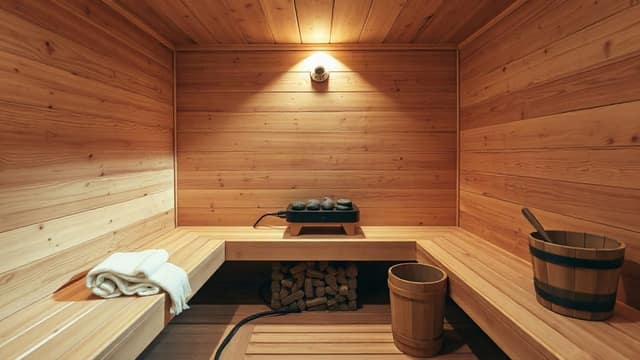 Home SaunaInfrared, outdoor cabin, barrel and blanket, with real watts, amps, dimensions and EMF
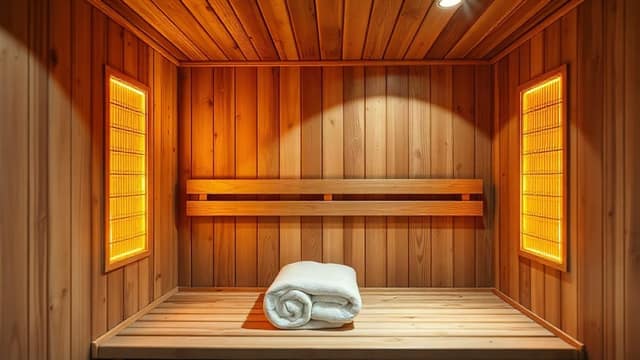 Infrared SaunaTen infrared saunas compared from 1 to 4 seats, indoor and outdoor, by size in inches, amps, kWh
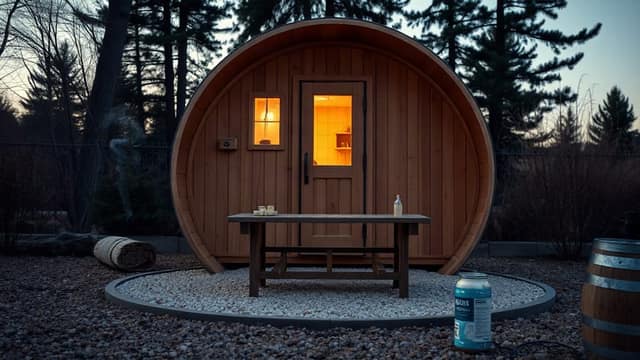 Outdoor SaunaCabins, barrels, cubes and infrared, with real weights, heaters, circuits
 Portable Saunas for HomeEight real models compared on size, watts, amps, top heat and weight, with the Lifepro blanket recall
 Red Light and Near Infrared SaunaNine home saunas with red or near infrared LEDs compared on wavelength in nm, published mW/cm2, size