Indoor cabins range from a 35.5 in square one-seat model to a 94.4 in long four-seat cabin, so the first decision is how many people and how much floor. The second is the panel: plug-in infrared cabins use a 15 A or 20 A outlet, while stone heaters need a 240 V, 30 A line. The nine models below come from Sun Home, JNH, Peak and Redwood Outdoors, set side by side on footprint, power and weight from their own spec pages. We tried none of them ourselves. When maker pages contradict each other, the entry names the conflict, so you can ask the maker.
How do the nine indoor cabins line up on size and power?
In two lines
The nine cabins run from 8.8 to 36.1 sq ft and from 1,320 to 6,000 W. Four infrared models plug into 120 V, and five need 240 V: the Peak Denali, Sun Home Nova 3 and Eclipse, and the Redwood Haven and Retreat.
The table puts seats, outside size and power in one view. Sizes are outside measurements in inches (width x depth x height), and power is the maker figure where the page gave one. Where we found none, the cell says so.
| Model | Seats | Type | Outside size (W x D x H) | Power |
|---|---|---|---|---|
| Sun Home Pod | 1 | Far infrared plus red light | Round, 40.1 in across, 77.5 in tall | 1,710 W, 120 V, 20 A GFCI |
| JNH Joyous 1 Person | 1 | Far infrared | 35.5 x 35.5 x 75 in | 1,320 W, 120 V, 15 A |
| JNH Tosi 3-Person | 3 | Full-spectrum infrared | 59.1 x 39.5 x 75 in | 1,760 W, 120 V, 20 A |
| Sun Home Equinox 3-Person | 3 | Far and full-spectrum infrared | 62.3 x 45.9 x 77.7 in | 2,020 W, 120 V, 20 A GFCI |
| Peak Saunas Denali | 3 | Full-spectrum infrared plus red light | 61 x 44 x 75 in | 2,850 W, 240 V, 20 A |
| Sun Home Nova 3 | 3 | Traditional, electric heater | 64.9 x 57.1 x 82.7 in | 6 kW, 240 V, 30 A |
| Redwood Outdoors Haven | 3 | Traditional, Harvia heater | 52 x 60.75 x 79.5 in | 6 kW, 240 V, 30 A |
| Redwood Outdoors Retreat | 4 | Traditional, Harvia heater | 52 x 76.4 x 79.5 in | 6 kW, 240 V, 30 A |
| Sun Home Eclipse 4-Person | 4 | Infrared plus red light | 94.4 x 55.1 x 76.7 in | 240 V, 22 A |
The order follows the questions you must answer: how many people, which power can you reach, and do you want dry infrared warmth or a stove with stones. The sections below take each in turn.
Which indoor sauna should you buy first?
Buy the JNH Tosi 3-Person for a plug-in cabin with room for three: it needs only a 120 V, 20 A outlet and its footprint is 16.2 sq ft. Buy the Sun Home Nova 3 for a classic hot sauna if a 240 V, 30 A line is in reach. Buy the JNH Joyous 1 Person if you are alone and the room is small, at 35.5 in square. The home sauna guide page compares every format, outdoor ones included.
Which cabin matches your room and your panel?
Pick the row that describes your room and your panel. This is the whole decision on one screen.
| Your situation | Buy | Why |
|---|---|---|
| Alone, small room, normal outlet | JNH Joyous 1 Person | 35.5 in square, 1,320 W, 120 V, 15 A |
| Alone, red light wanted | Sun Home Pod | 1,710 W, 165 °F, red light panel |
| Three people, plug-in, low EMF | JNH Tosi 3-Person | 1,760 W, 0.02 mG claim |
| Three people, 20 A line, roomy | Sun Home Equinox 3-Person | 62.3 in wide, 2,020 W, 642 lb |
| Three people and red light | Peak Saunas Denali | 2 red light panels, 150 °F |
| Hot dry air, stones, steam | Sun Home Nova 3 | 230 °F, HUUM 6 kW heater |
| Hemlock cabin with a stove | Redwood Outdoors Haven | 6 kW Harvia KIP, about 1,000 lb |
| Four seats with a stove | Redwood Outdoors Retreat | 24.2 sq ft inside |
| Four seats, infrared, 240 V | Sun Home Eclipse 4-Person | 18 heaters, 925 lb |
The nine indoor saunas in detail
In two lines
Each entry gives size, power and weight in inches, watts and pounds. Seats run from 1 (Pod, Joyous 1) to 4 (Retreat, Eclipse), and weights from 246 lb to about 1,000 lb.
Each entry also says what the cabin does well and who should skip it. We print no prices, and each Check price button opens the live offer.
Sun Home Pod: top pick for one person with red light
The Pod seats one, stands 77.5 in tall and is round, 40.1 in across, with 10 far-infrared heaters in four zones, an integrated red light panel and a 165 °F maximum. Sun Home lists 1,710 W at 120 V, 14.2 A, on a 20 A GFCI circuit with a NEMA 5-20P plug. It weighs 385 lb and has a Japanese cedar interior (Sun Home's help center says hemlock before October 2026). The interior is 35.4 in across, and Sun Home asks for 25 in clear in front of the door.
Sun Home lists seven years across its infrared line, a term we did not see on the Pod's own page. EMF is claimed for the infrared heaters, with no number on the Pod page. For other Sun Home sizes, see our Sun Home Saunas guide.
Good for: one person who wants red light in a bedroom corner. Not for: a couple, a 15 A circuit, or anyone who wants stones and steam.
JNH Joyous 1 Person: the smallest cabin on this page
The Joyous 1 Person is 35.5 x 35.5 x 75 in outside and 33 x 33 x 71.5 in inside, which is 8.8 sq ft of floor. JNH lists six carbon-fiber far-infrared heaters, 1,320 W at 120 V and 15 A, and a weight of 246 lb. The wood is Canadian hemlock. The control panel caps at 140 °F, which JNH attributes to a safety standard.
The EMF line is inconsistent on the page: the spec table says under 8 mG and the page data says comparable to everyday electronics. The page does not state an ETL listing, so ask JNH. Warranty is one year standard, with paid upgrades to two and three years. See the brand in our JNH Lifestyles guide, and other solo formats in one person saunas.
Good for: a tight room, a rental or a first sauna. Not for: a tall bather who wants to stretch out, or high heat above 140 °F.
JNH Tosi 3-Person: the plug-in cabin for three
The Tosi is a full-spectrum infrared cabin of 59.1 x 39.5 x 75 in for three people, rated 1,760 W on 120 V and a dedicated 20 A breaker with a NEMA 5-20R socket. JNH's comparison table gives 0.02 mG EMF for the Tosi line, a ~120 to 170 °F range and Canadian hemlock with cedar. The footprint is 16.2 sq ft.
The weight and the interior size were not on any page we could open, so we do not print them. JNH sells the Tosi in a red light version, so confirm the exact trim. The 0.02 mG figure is a maker claim, and JNH's own table shows other lines at under 8 mG. Compare it with the larger full-spectrum infrared saunas.
Good for: three people on a standard 20 A outlet. Not for: a 15 A shared circuit, or a buyer who wants a stove.
Sun Home Equinox 3-Person: the roomy plug-in option
The Equinox 3-Person measures 62.3 x 45.9 x 77.7 in and weighs 642 lb, with the same heater mix as the 2-person plus one more far-infrared heater. Sun Home's page gives 2,020 W and 16.83 A, a top temperature of 165 °F and a dedicated 120 V, 20 A GFCI circuit. The wood is kiln-dried eucalyptus and the door opening is 28 in. EMF is listed at 0.3 to 0.9 mG at 3 ft.
The 2,020 W belongs to the 3-person; the 2-person is 1,880 W and 15.67 A. At 16.83 A the cabin sits above the 16 A (80 percent) mark of a 20 A circuit, so have an electrician confirm the line. Owners report about 45 minutes to reach a good temperature. Read our Sun Home Equinox review for the 2-person details.
Good for: a spare room or basement with a free 20 A line. Not for: red light fans, since the page lists none.
Peak Saunas Denali: three seats with red light
The Denali is 61 x 44 x 75 in outside and 57 x 40 x 67 in inside, with eight heating panels, two full-body red light panels of 216 LEDs each and a 150 °F ceiling. Peak's current page lists 240 V on a 20 A circuit and 375 lb, and an earlier read gave 2,850 W, which the page no longer shows. The warranty is 7 years on structure, wood and heaters, and 3 years on the controls and the red light panel.
Peak's own pages disagree on the electrical figure, since an older buyer's guide cites a 240 V, 30 A circuit and a larger 71 x 47 x 75 in footprint. We found no ETL listing or published EMF reading for this model. Ask Peak for both. A returned Denali carries a 25 percent restocking fee within Peak's 30 day trial, and the buyer pays the freight back. See the Peak Saunas guide and our red light saunas page.
Good for: a family that wants red light and has 240 V at the wall. Not for: a 120 V home, or a buyer who needs a published mG report.
Sun Home Nova 3: the traditional cabin with a modern heater
The Nova 3 is 64.9 x 57.1 x 82.7 in, weighs 772 lb and uses a HUUM DROP 6 kW electric heater on 240 V and 30 A. The interior is Japanese cedar and the cabin reaches 230 °F. Floor area is 25.7 sq ft. Sun Home gives no EMF number, because its claims apply to the infrared heaters.
That is a real sauna: dry heat, stones, a ladle of water for steam. It also needs an electrician and the clearances around the heater that the manual spells out. For the heat type, see what a traditional dry sauna is and our sauna heater guide.
Good for: a basement or garage corner with a 240 V line. Not for: a 120 V home or a room under 7 ft of ceiling.
Redwood Outdoors Haven: the hemlock cabin for two or three
The Haven is 4 ft 4 in wide by 5 ft 0.75 in long by 6 ft 7.5 in tall (52 x 60.75 x 79.5 in), with about 18.9 sq ft inside and heat-treated hemlock walls. Redwood lists a 6 kW Harvia KIP heater as included, with an 8 kW KIP and a 9 kW Homecraft H-Series as options on 40 A and 50 A breakers, and a weight of about 1,000 lb. Redwood showed the Haven out of stock on 17 November. The door is tempered glass in a wood frame.
Heater and breaker are shown per option, so confirm which one is in your cart before wiring. Redwood sells it as a kit for DIY assembly. A full model write-up is in our Haven review, and the brand is in Redwood Outdoors saunas.
Good for: two or three people who want hemlock and a Harvia stove. Not for: a floor that cannot carry about 1,000 lb, or a 120 V home.
Redwood Outdoors Retreat: the four-seat cabin with a stove
The Retreat is 4 ft 4 in wide and about 6 ft 4 in long (52 x 76.4 x 79.5 in), with 24.2 sq ft and 156.4 cu ft inside. It seats four, though Redwood says it is comfortable for three. The standard heater is a 6 kW Harvia KIP on 240 V and 30 A, with 8 kW on 40 A and 9 kW on 50 A as options.
Weight is about 1,000 lb on the Retreat page, while a sister page for a 4-person cabin lists 800 lb and other dimensions, so check shipping details. Redwood showed the Retreat out of stock on 17 November. The 9 kW heater appears in the header specs, but the included one is 6 kW. Do not wire a 50 A line for a 6 kW stove.
Good for: a household of four with a basement and an electrician. Not for: a small bedroom, or a plug-in-only home.
Sun Home Eclipse 4-Person: infrared and red light for the family
The Eclipse 4-Person is 94.4 x 55.1 x 76.7 in and weighs 925 lb, with 18 heaters (12 far infrared, 4 full-spectrum and 2 floor heaters) and two red light panels. It runs on 240 V at 22 A with an L6-30P plug. Temperature range is 0 to 165 °F, and the user guide says most people use 120 to 140 °F. The wood is Japanese cedar.
It is a long cabin, 36.1 sq ft of floor, so it suits a basement or a large spare room. The control has app pairing over 2.4 GHz Wi-Fi and Bluetooth audio. Our Sun Home Eclipse review covers both sizes.
Good for: four people who want infrared and red light. Not for: a house with no 240 V line, or a hall that a 94 in cabin cannot pass.
Infrared or traditional: which kinds of cabin go indoors?
In two lines
Infrared cabins have ceilings of 140 to 170 °F on 1,320 to 2,850 W. Traditional cabins heat the air to 230 °F with a 6 kW stove on 240 V, 30 A. Hybrids carry both and are covered in the outdoor guide.
Three formats dominate: infrared cabins, traditional cabins with a stove, and hybrids that carry both. This page covers the first two, with the hybrid mentioned in the outdoor guide. A kit and a built-in room are different products, covered below.
| Type | How it heats | Maker ceiling in this guide | Power in this guide |
|---|---|---|---|
| Infrared cabin | Panels warm the body directly | 140 to 170 °F | 1,320 to 2,850 W, 120 V or 240 V |
| Traditional cabin | Heater warms air and stones | Up to 230 °F | 6 kW, 240 V, 30 A |
| Infrared plus red light | Panels plus a light panel | 150 to 165 °F | 1,710 to 2,850 W |
The big split is power and feel. A traditional cabin gives hot air and steam from water on stones. An infrared cabin gives milder air with a different feel. Our infrared vs traditional sauna page compares them in full.
How do indoor saunas work?
A heater raises the temperature in a small insulated cabin (see what a sauna is). In an infrared model, carbon or ceramic panels warm the body directly, and Cleveland Clinic puts the cabin air at 110 to 135 °F, against 150 to 195 °F in a traditional cabin. In a traditional model, a 6 kW heater warms the air, up to 230 °F on the Nova, and stones hold the heat. A controller sets the temperature and a timer. Because the cabin is an insulated box, it warms itself and does not draw on the house heat registers, and it adds little heat to the room around it. Sun Home lists a 230 °F top for the Nova.
Indoor or outdoor: which suits your property?
It depends on space and power. An indoor cabin fits a spare room, a basement or a garage corner, and needs no weatherproofing. An outdoor cabin needs a yard and a 240 V line at the house. The detail is in indoor vs outdoor saunas and the outdoor sauna guide.
Can an indoor sauna be used outdoors?
Not safely, unless the maker says so. Infrared cabins like the Equinox and the Pod are built for a dry interior and have no roof or weather seals. A portable cabin is another route, covered in portable saunas. A cabin made for outdoors, such as the Sun Home Luminar, has an aluminum shell and a roof. A porch with a roof is not the same as indoors: ask the maker in writing. The reverse needs the same care: an outdoor cabin or a barrel is built for open air, so ask the maker before you bring one inside.
How do you choose an indoor sauna?
In two lines
Choose by three numbers: 8.8 to 36.1 sq ft of floor, the circuit you can use (15 A, 20 A or a 240 V, 30 A line) and the top temperature, 140 to 230 °F. Then check EMF listings, wood and warranty.
Start from the room and the panel, not from the brand.
How much space does an indoor sauna need?
Allow the cabin footprint plus 1 to 2 in of clearance at the back and sides and room to open the door. Peak asks for that clearance. A 3-person cabin is 16.2 to 25.7 sq ft. The table lists floor area from outside dimensions.
| Model | Floor area | Weight | Height |
|---|---|---|---|
| JNH Joyous 1 Person | 8.8 sq ft | 246 lb | 75 in |
| JNH Tosi 3-Person | 16.2 sq ft | not listed | 75 in |
| Peak Saunas Denali | 18.6 sq ft | 375 lb | 75 in |
| Sun Home Equinox 3-Person | 19.9 sq ft | 642 lb | 77.7 in |
| Redwood Outdoors Haven | 21.9 sq ft | about 1,000 lb | 79.5 in |
| Sun Home Nova 3 | 25.7 sq ft | 772 lb | 82.7 in |
| Redwood Outdoors Retreat | 27.6 sq ft | about 1,000 lb | 79.5 in |
| Sun Home Eclipse 4-Person | 36.1 sq ft | 925 lb | 76.7 in |
Floor area is width times depth in inches, divided by 144. The Sun Home Pod is left out because it is round, 40.1 in across, which is about 8.8 sq ft. With a 96 in ceiling, the tallest cabin here leaves 13.3 in above it.
Where is the best place to put a sauna in your house?
A spare bedroom, a basement, a garage corner or a bathroom with floor space all work, if the floor is hard and level and the power is near. A basement has the floor and the 240 V panel nearby. A garage needs the cabin kept dry. Read the guides for a basement sauna, a garage sauna and a sauna in a bathroom. An apartment fits a plug-in cabin such as the Joyous 1 Person at 1,320 W, with the landlord's approval.
What goes under an indoor sauna?
Put it on a level, firm, hard floor. Concrete, tile or plywood over joists all work. The weights run 246 to about 1,000 lb, so a carpet will compress and can trap moisture. We found no maker that approves carpet, so check the manual. A floor guide is in sauna flooring.
Do indoor saunas need ventilation, a drain or insulation?
An indoor cabin is a sealed insulated box with its own vents. It does not need a floor drain, because water goes on stones a ladle at a time and infrared cabins add almost none. Leave the door open after a session so the wood dries, which prevents mold and smell. The maker manual sets the vent gaps. Insulating the room matters for a built-in room, not for a freestanding cabin. See how to build a sauna.
Can your circuit run an indoor sauna?
Check the breaker, the wire and the outlet before the cabin. A 120 V cabin needs a dedicated circuit, 15 A or 20 A as listed. A traditional cabin needs 240 V. The table shows the maker figures.
| Model | Volts | Draw | Breaker or plug |
|---|---|---|---|
| JNH Joyous 1 Person | 120 V | 1,320 W | 15 A |
| Sun Home Pod | 120 V | 1,710 W, 14.2 A | 20 A GFCI, NEMA 5-20P |
| JNH Tosi 3-Person | 120 V | 1,760 W | 20 A, NEMA 5-20R |
| Sun Home Equinox 3-Person | 120 V | 2,020 W, 16.83 A | 20 A GFCI, dedicated |
| Peak Saunas Denali | 240 V | 2,850 W | 20 A |
| Sun Home Eclipse 4-Person | 240 V | 22 A | L6-30P |
| Sun Home Nova 3 | 240 V | 6 kW | 30 A |
| Redwood Outdoors Haven, Retreat | 240 V | 6 kW (8 or 9 kW optional) | 30 A (40 A or 50 A) |
At 120 V, 1,760 W is 14.7 A, below the 16 A mark of a 20 A circuit, while the Equinox 3-Person at 16.83 A is above it. A 6 kW heater at 240 V draws 25 A, so follow the 30 A the maker lists and have an electrician confirm. The wiring rules for sauna heaters sit in article 424 of the National Electrical Code (NFPA 70). More in sauna electrical requirements.
How much electricity does an indoor sauna use?
An indoor sauna uses its rated kilowatts for each hour of full draw, and less once the thermostat cycles. A 45 minute session at full draw is the rated kW times 0.75.
| Draw | kWh in 45 min at full draw |
|---|---|
| 1,320 W | 0.99 |
| 1,760 W | 1.32 |
| 2,850 W | 2.14 |
| 6 kW | 4.5 |
Multiply the kWh by your own rate per kWh to get the cost. We print no price, because rates differ by state; the EIA U.S. residential average was 18.16 cents per kWh in August 2026. Real use is lower, because the heater cycles once the cabin is hot. For the other cost lines, see sauna cost.
Which wood works for an indoor sauna?
The makers here use Canadian hemlock, Japanese cedar, kiln-dried eucalyptus and heat-treated hemlock. Cedar smells and resists rot. Hemlock is odor free and untreated. Our wood pages compare them: wood for a sauna guide and cedar saunas.
How hot do indoor saunas get?
The infrared cabins here top out at 140 °F (Joyous 1), 150 °F (Denali) and 165 °F (Pod, Eclipse). The Nova 3 reaches 230 °F. Cleveland Clinic puts infrared cabin air at 110 to 135 °F, and Sun Home says most people use 120 to 140 °F. See the sauna temperature guide and how hot is too hot.
Are indoor saunas safe, and are they worth it?
In two lines
Yes for most healthy adults inside the maker's limits: keep the clearances, buy an ETL or UL listed model, and ask a doctor first with a heart condition or in pregnancy. The best-known study, Laukkanen 2015, is observational.
A sauna used within the maker's limits is a common home appliance, but there are rules. Keep the clearances, use a listed model with an ETL or UL mark, and do not hang towels on a heater. Fire and mold risks come from misuse and wet wood. See sauna risks and safety.
Ask your doctor before using a sauna if you have a heart condition, low blood pressure, are pregnant, drink alcohol or take medication. Children need an adult and shorter sessions. The best known study is Laukkanen et al. in JAMA Internal Medicine (2015): 2,315 Finnish men followed about 20 years. Men who used a traditional sauna 4 to 7 times a week had a 40 percent lower all-cause mortality than men who used one once a week. It is observational, so it shows an association, not a cure. Read more in sauna health studies and sauna benefits.
How much do indoor saunas cost?
In two lines
Cost follows size, heat type and brand. A 1-person plug-in cabin sits at the entry level, a 3-person infrared cabin mid range, and a 6 kW stove cabin costs more once the 240 V, 30 A run is added.
We print no figure, because prices moved too much between sellers. For figures, see sauna cost and infrared sauna cost. Installation cost has its own page, cost to build a sauna.
Can you build or install an indoor sauna yourself?
In two lines
You can assemble a panel cabin in about a day with two people, but a 240 V, 30 A line is an electrician's job. Redwood sells the Haven as a DIY kit, and a built-in room takes framing, a vapor barrier and a listed heater.
A panel cabin goes together quickly, and Redwood sells the Haven as a DIY kit. A built-in room from lumber takes framing, vapor barrier and a listed heater, in how to build a sauna. Kits are covered in indoor sauna kits. Installation steps are in sauna installation.
How do you use and clean an indoor sauna?
In two lines
Preheat, sit 10 to 20 minutes, cool down and drink water. Wipe the benches dry after each session and clean the wood with a damp cloth, never a pressure hose.
Use how to use a sauna for the routine and how long to stay in a sauna for time. Cleaning steps are in how to clean a sauna.
Which indoor sauna for which buyer?
In two lines
Alone in a small room: the JNH Joyous 1 Person at 35.5 in square. A family of three on 120 V: the JNH Tosi at 1,760 W. Stones and steam on 240 V: the Sun Home Nova 3. The table lists a pick for nine buyers.
| Buyer | Pick | Watch for |
|---|---|---|
| Solo, small room | JNH Joyous 1 Person | 140 °F cap |
| Solo, red light | Sun Home Pod | round, 40.1 in across |
| Family of three, 120 V | JNH Tosi 3-Person | weight not listed |
| Family of three, roomy | Sun Home Equinox 3-Person | 16.83 A on a 20 A line |
| Red light, 240 V | Peak Saunas Denali | 20 A or 30 A conflict |
| Stones and steam | Sun Home Nova 3 | 240 V, 30 A |
| Hemlock and stove | Redwood Outdoors Haven | heater and breaker choice |
| Four seats and stove | Redwood Outdoors Retreat | weight conflict |
| Four seats, infrared | Sun Home Eclipse 4-Person | 94.4 in length |
What should you buy with an indoor sauna?
In two lines
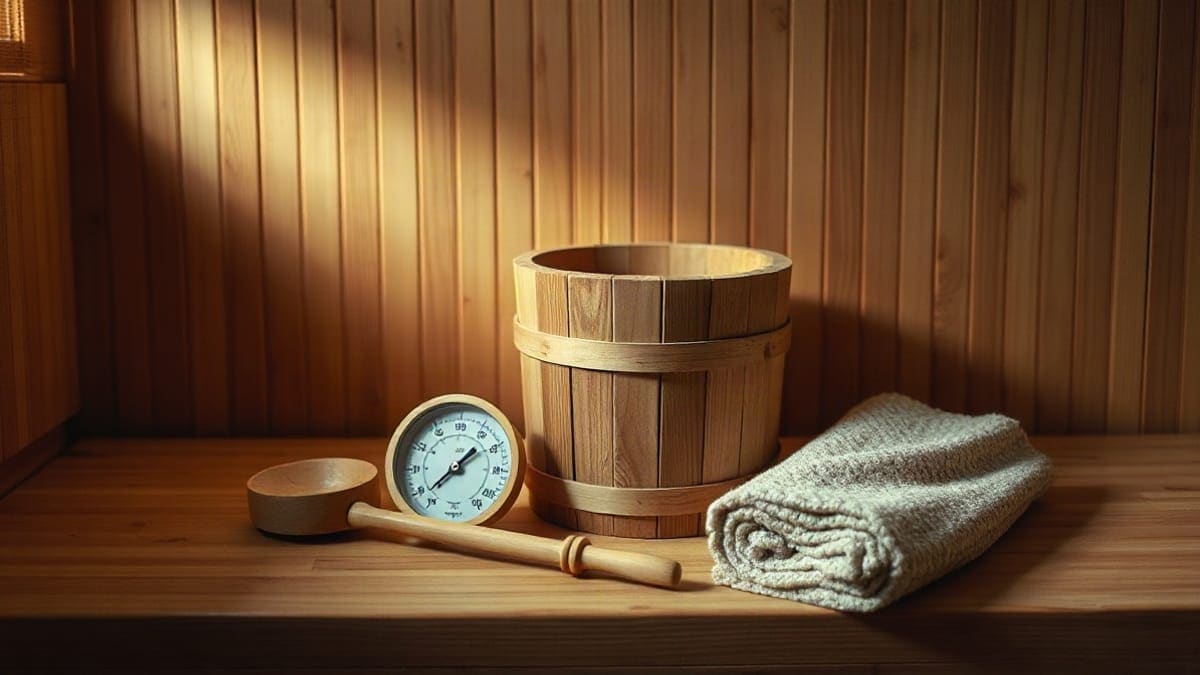
Buy a thermometer first, then towels, a sauna mat, and a wooden bucket and ladle if the cabin has a stove. A cold plunge or a steam shower is a separate purchase, not part of the cabin.
Our list is in sauna accessories. If you like a cold finish, see contrast therapy with a cold plunge. A bathroom with a shower beside it may also fit a steam shower.
6 common mistakes when buying an indoor sauna
In two lines
Six mistakes cost indoor buyers most: a 240 V cabin in a 120 V home, a 94.4 in cabin that cannot pass the hall, 16.83 A on a 20 A line, an EMF claim with no mG reading, a 50 A line for a 6 kW stove and a soft floor under 1,000 lb.
1. Buying a 240 V cabin for a 120 V home
The Nova 3 runs a 6 kW heater on 240 V and 30 A, and the Eclipse needs 22 A on an L6-30P plug. A new 240 V line is an electrician's job that the cabin price does not show. Read the panel before you read the spec page.
2. Ignoring the size of the cabin and the door
The Eclipse is 94.4 in long and the Equinox 3-Person has a 28 in door opening (Sun Home). Measure the hall, the stairs and the room door against the longest panel before you order.
3. Putting 16.83 A on a 20 A line
The Equinox 3-Person draws 16.83 A, above the 16 A (80 percent) mark of a 20 A circuit. The JNH Tosi draws 14.7 A, below it. The continuous-load rule is why a shared line trips.
4. Trusting an EMF claim with no mG reading
JNH gives the Tosi line 0.02 mG in its comparison table while other lines read under 8 mG, and Peak prints no figure for the Denali. Ask for the mG, the distance and the instrument.
5. Wiring 50 A for a 6 kW stove
The Redwood Retreat ships a 6 kW heater on 30 A, and 50 A is for the 9 kW option. A 6 kW heater draws 25 A at 240 V (6,000 W divided by 240 V), so a 50 A line buys nothing.
6. Setting the cabin on a soft floor
Weights run from 246 lb to about 1,000 lb on the Haven. Carpet compresses under that load and holds moisture, which the EPA mold guide ties to mold growth. Use a hard, level floor.
How we chose these saunas
In two lines
We read maker pages for nine indoor cabins from Sun Home, JNH, Peak and Redwood Outdoors, left out two-seat cabins and any model we could not read, and tested none. Where sources conflict, the entry says so.
We started with those four makers, then checked the sale status on each maker page. We left out 2-person cabins, which have their own guide, and any model we could not read. Divine Saunas has no indoor page we could read.
FAQ
Where can you buy an indoor sauna?
Buy from the maker, from a retailer that lists the exact model code, or through the Check price buttons here. Confirm stock, because one model was shown sold out by some sellers. See saunas for sale.
Are indoor saunas worth it?
If you will use one weekly, many owners say yes. The research is observational, so it is a lifestyle choice, not a treatment. The cost of electricity is small beside the purchase.
Can you have a sauna in your house?
Yes. Any of the nine here fits a room, basement or garage corner if the floor is hard and the circuit matches. A rental needs the landlord's approval.
Is the power draw of an indoor sauna high?
A 1,320 W cabin uses 0.99 kWh in 45 minutes at full draw, and a 6 kW stove 4.5 kWh. Both fall once the thermostat cycles.
Do indoor saunas need to be vented?
Yes, the cabin has vents set by the maker, but you do not vent it to the outside of the house.
Are indoor saunas a fire hazard?
Only if misused. Keep clearances, buy a listed model and keep towels off the heater.
Do indoor saunas cause mold?
Not if the wood dries. Leave the door open after use and wipe the bench.
What temperature does an indoor sauna reach?
Infrared cabins here have ceilings of 140 to 170 °F and a traditional one reaches 230 °F.
Can indoor saunas go on carpet?
Avoid it. We found no maker that approves it, and the weight is 246 to about 1,000 lb.
Do indoor saunas need a drain?
No drain is required by the models we read, since water use is a ladle at a time.
What type of indoor sauna is best?
Infrared for a plug-in room, traditional for hot air and stones. See the infrared saunas guide and the traditional saunas guide.
Can you put an indoor sauna in a garage?
Yes, on a dry, hard floor and with a heated space in winter. See garage sauna.
Is it safe to have a sauna in your house?
For healthy adults it is a common appliance, with the safety rules above.
How big is an indoor sauna?
From 35.5 in square for one person to 94.4 x 55.1 in for four.
Sources
- Sun Home Saunas, Pod 1-person
- Sun Home Saunas, Equinox, Nova and Eclipse
- JNH Lifestyles, Joyous 1 Person
- JNH Lifestyles, compare saunas
- Peak Saunas, Denali 3-Person
- Redwood Outdoors, Haven Indoor Sauna
- Redwood Outdoors, Retreat 4 Person Indoor Sauna
- Cleveland Clinic, sauna benefits and temperatures
- NFPA 70, National Electrical Code
- Laukkanen et al., JAMA Internal Medicine 2015, PubMed
Keep comparing
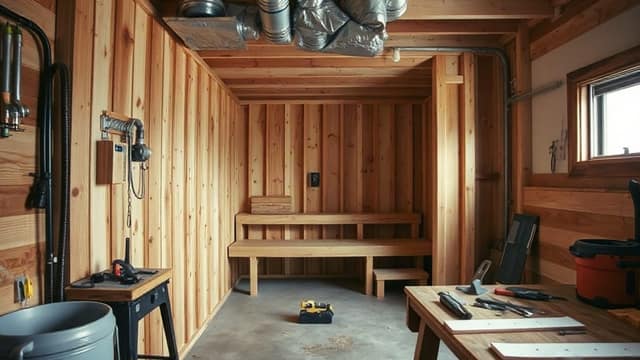 Sauna Kits (Indoor and Outdoor)Precut, prefab, cabin and barrel kits with box contents, wood, heater, circuit, floor and ceiling needs
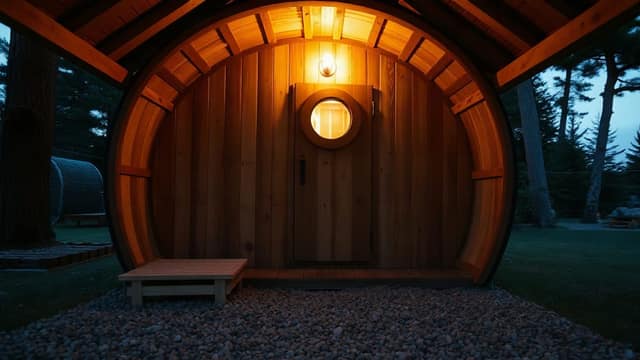 Barrel Sauna for Your BackyardRedwood Outdoors, Almost Heaven, Backyard Discovery and SunRay, with wood, interior size, heater, circuit
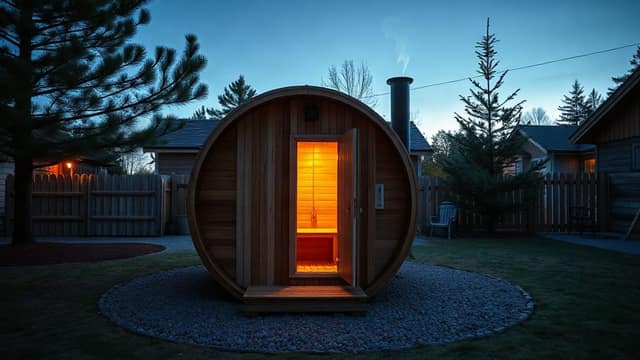 Outdoor Sauna KitsWhat each crate holds, box weights, assembly work the maker states, pad size, heater and circuit
 Gifts for Sauna LoversSand clock, scents, hat, robe, backrest, cushion, infrared blanket and inflatable cold tub
 Home SaunaInfrared, outdoor cabin, barrel and blanket, with real watts, amps, dimensions and EMF